From a Crowded Evidence Field to a Defensible Product Decision
From a Crowded Evidence Field to a Defensible Product Decision
We expected research to confirm a product direction. Instead, it changed the decision.
The uncomfortable starting point
The market we were studying did not suffer from a shortage of confident claims. There were frameworks, courses, playbooks, and strong opinions everywhere. The difficult part was determining which ideas were repeated because they were well supported and which were repeated because they were easy to sell.
We could have selected a direction by instinct and gathered supporting examples afterward. That would have been faster. It also would have made the research decorative.
So we took the slower path. We collected a large field of claims from many sources, broke them into smaller units, grouped ideas that were genuinely related, and kept the source trail attached. The goal was not to create the largest possible library. It was to make every later conclusion answerable to the material that produced it.
What the evidence changed
Our first reading suggested that two areas both lacked useful hands-on support. Once the material was normalized and checked again, that conclusion did not survive.
One area was thin. The other was smaller than we expected, but it was not empty.
That correction mattered more than the original finding. It showed us that the system could challenge the memo instead of merely producing one. We preserved the earlier conclusion and recorded why it had been superseded rather than quietly rewriting the story.
The broader pattern was also useful. One commercially popular topic attracted plenty of attention but had relatively little grounded practice behind it. Other, quieter topics showed stronger agreement across independent sources and offered a more defensible base for teaching and product work.
We did not interpret that as proof that the popular topic was worthless. It meant we had not yet earned the right to present ourselves as experts in it. The responsible choice was to strengthen the evidence before making that promise.
The decision
We chose to build from the areas the evidence supported most clearly and treat the weak area as research still to be done.
That sounds obvious after the fact. It was not obvious while market demand was pulling in another direction.
The value of the process was not that a machine made the decision for us. It did not. The value was that the evidence field had been organized well enough for us to see the tradeoff, inspect the trail, and make a decision we could defend.
If the source material changes, the recommendation should be capable of changing with it. If a conclusion cannot survive that possibility, it is probably positioning—not knowledge.
That became the practical standard: do not sell what the market rewards us for claiming. Build from what the evidence presently allows us to defend, and keep working on the part it does not.

One character flips ALLOW to BLOCK
A recorded evaluation run reproduced our composite hash math offline, watched a correct vector route ALLOW through twelve checkpoints, then watched a mismatched composite and a malformed tier both die as isolation faults. Governance by arithmetic: the router cannot be argued with, because it is a hash.
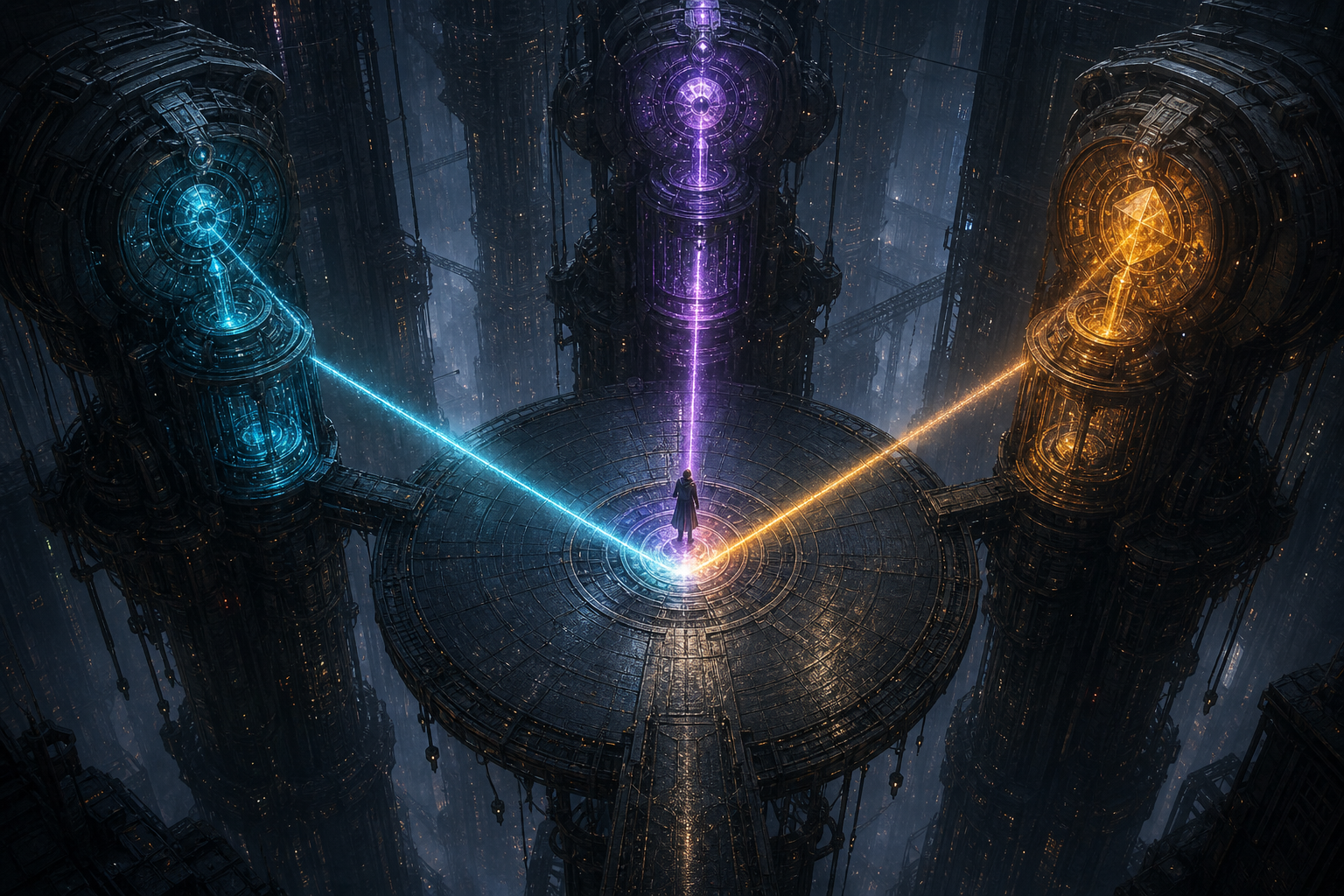
The Gate Is Three Readers
The live crossing is not one question but three, asked at once by three readers who cannot see each other's answers — and the checklist was never beside the gate; it was the gate. Part 6 of the Authentication series.

The Check That Wasn't Checking
The verifier had been asking the right question all along — and then it threw the answer away. An imposter who was always let in, a fix smaller than the bug, and why a check that never compares is the dangerous kind. Part 5 of the Authentication series.
Stay Updated
Get notified when we publish new research or open licensing opportunities.
Owner-gated agent operations. Every action behind your flip.
See the platform →
0 comments