Seriesnarrativeactive
TCA — Temporal Cohesion Architecture
How a system stays coherent as it changes over time.
Series completeness4 / 9
5 parts still to be written.
Your reading— / 4
Kept on your device. No account, no tracking.
Reading path
in order — start at the top1
Temporal Cohesion Architecture: When Trust Becomes a Property of the System
Distributed intelligence has a difficult problem: how does a system preserve identity, authority, and integrity while its state is constantly changing? Traditional security models answer with credentials, permissions, and expiration times. Those mechanisms establish who may act, but they do not continuously prove that an action still belongs to the system state that originally authorized it.
Sep 2, 20264 min
2
Dual-key authority
Nothing ships without the owner's flip. The pattern, end to end.
Jul 7, 20261 min187 views
3
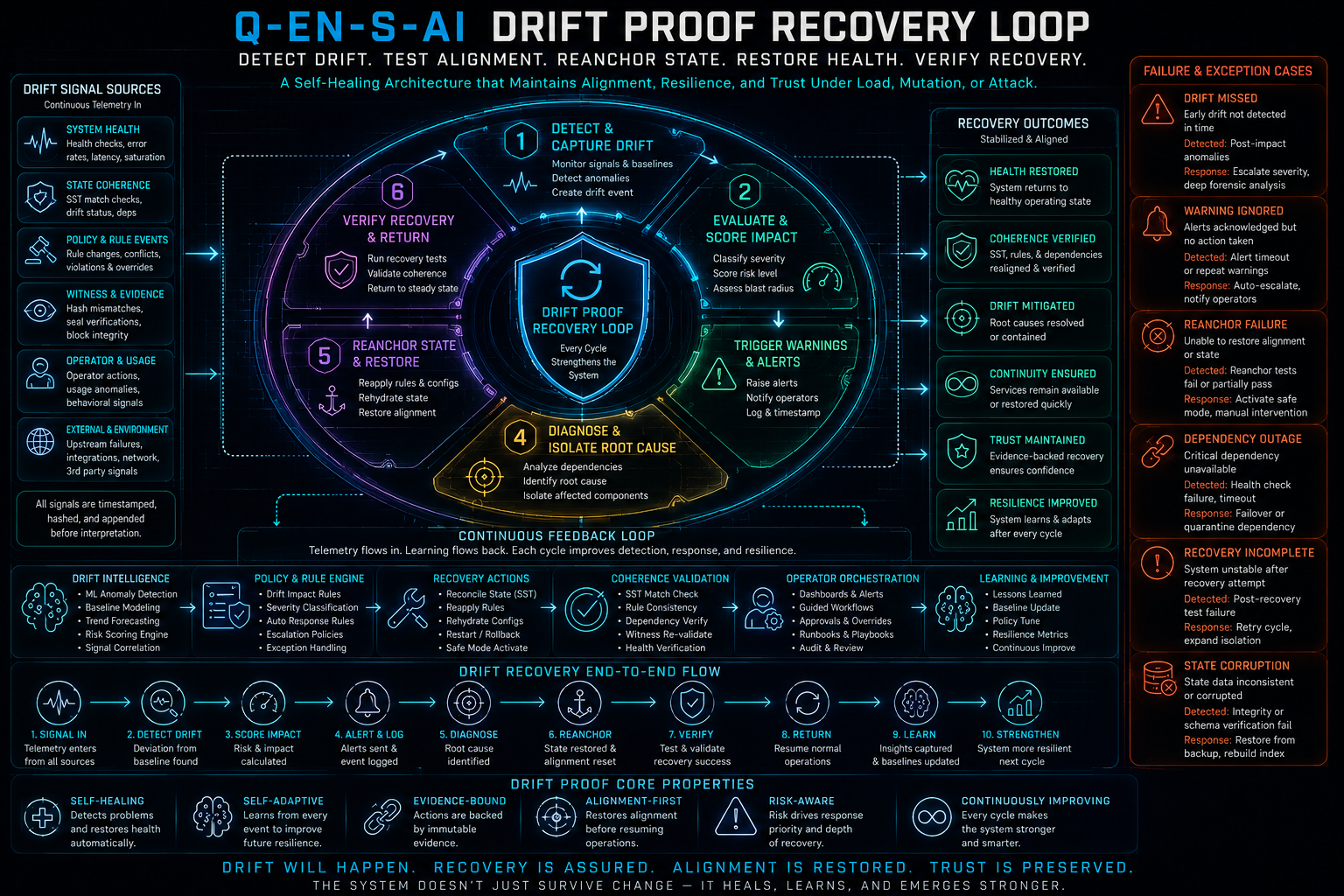
Drift Starts as a Difference, Not a Failure
Temporal cohesion begins by capturing differences in state, behavior, evidence, and system health before deciding what any difference means.
Sep 2, 20264 min
4
Score the Impact Before You Choose the Response
A drift signal becomes actionable only after the system separates severity, scope, evidence quality, and operational consequence.
Sep 2, 20263 min
5
Parts 5–9 are still being written. This series is enriched as the work happens — subscribe and each part reaches you the day it lands.