Work, Evidence, and the Specialist Systems
A useful specialist does more than produce an answer. It leaves enough behind for someone else to understand, verify, and continue the work.
Once we separated capability from authority, another question followed: what should the system actually do with the authority it has been given?
Our answer was not to build one enormous AI and ask it to become an expert in everything. Different kinds of work have different inputs, risks, tools, and definitions of completion. We built specialist systems around those differences, then gave them a shared way to record and hand off their work.
Qensai Forge is the clearest place to start.
We think of Forge as a safety editor for AI work. You give it a prompt, but the first response is not automatically treated as the finished result. The work can be checked for risk, missing evidence, contradictions, and policy problems. The goal is to turn “an AI response” into a more reviewable, safer, decision-ready output.
That wording matters. Review does not magically make every answer correct. It creates a better surface for judging what the answer says, what supports it, and what still needs attention.
King PBI specializes in a different gap: the distance between “I have data” and “I understand what it means.”
For an analyst, that can mean discovering prepared information, choosing useful fields, building queries, and reviewing reports. For a business owner or manager, the value is more direct: asking practical questions about what is happening without first becoming an expert in databases, formulas, or disconnected spreadsheets.
The important output is not merely a chart. It is an analysis that can show where the information came from, what question was asked, and what conclusion the available data supports.
Budget Assembly approaches financial work from another angle.
It is not simply a place to enter a budget. Its documented purpose includes synchronization, planning, transaction and journal reconciliation, bills, invoicing, and financial reporting surfaces. In ordinary language, it is meant to help keep financial information consistent and usable while people work with it in different ways.
We avoid promising that every financial surface is always synchronized under every condition. The stronger and more honest idea is reconciliation: when records disagree, the system should help identify the difference and support a reviewable path toward resolving it.
System Logic Kit brings the same specialist approach into the HVAC world where our story began.
SLK is an HVAC system selector and component-analysis platform. Its workflows can gather the details of a job, narrow the relevant equipment, and help a professional evaluate compatible options. That is very different from general chat. The usefulness comes from understanding the shape of a particular professional decision and collecting the information that decision requires.

From the original series artwork — explore the series.
Behind systems like these is a shared build discipline. Before consequential work begins, we define the problem, expected outcome, non-goals, affected areas, risk, owner, and acceptance criteria. We plan small and reversible changes, verify both success and failure paths, preserve test evidence, and prepare a handoff. The specialist’s interface may be simple, but the work supporting it should remain reviewable.
Qensai Content Signal Capture—QCSC—shows the same pattern in publishing.
An idea can be captured as a signal rather than immediately becoming a post. The team can review and triage it, develop the worthwhile material, add evidence and media, and then decide whether it is ready to publish. QCSC is a repeatable pipeline that turns selected signals into publishable, evidence-backed content.
This is the workflow we have been using for this blog. The capture is not the publication decision. Preparation is not approval. Each stage gives people and agents a clearer place to inspect the work before it reaches the public.
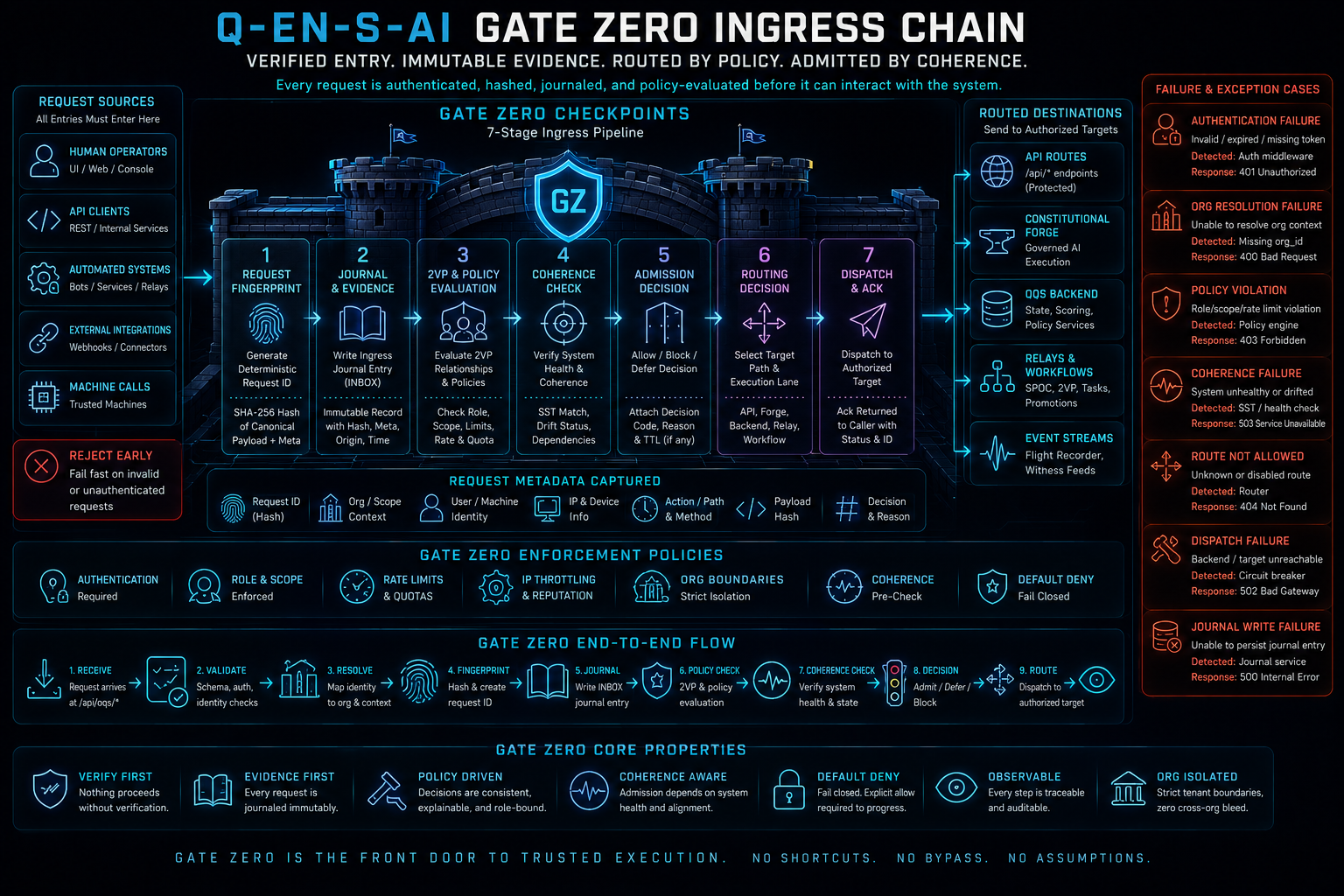
Security operations remain mostly in the background. They help check boundaries, health, risk, and whether work is occurring under the expected rules. Most readers should not need to understand that machinery in order to use a specialist system. Its job is to support dependable operation without becoming the main character in every task.
These specialists can work independently, and they can pass work between one another when the route and authority allow it. The system documentation includes patterns for dispatching a defined task to a specialist such as King PBI and receiving a structured result for review. We are not presenting that pattern as a completed customer story here; a real cross-system case should be selected and sanitized before publication.
Whether work stays inside one system or moves across several, the minimum handoff should remain familiar.
It should include the answer or artifact produced; the evidence, tests, checks, or data supporting it; a record of what was done and under what scope; recommendations for what should happen next; and the open questions that remain unresolved.
That is our practical definition of finished: the output is usable, verifiable, and actionable by the next human or agent.
The product names help us describe the different jobs, but the shared operating idea matters more. One system helps review AI output. Another helps people understand data. Another reconciles financial work. Another supports HVAC decisions. Another develops selected signals into publishable content. Quiet supporting systems help keep their work inside known boundaries.
They do not need to become one giant brain to cooperate. They need clear responsibilities, governed routes, and evidence that survives the handoff.
That final requirement leads to the last chapter. If people change, bots change, sessions end, and work crosses specialist boundaries, how does the organization keep enough context to continue without starting over?

0 comments