PracticeAug 21, 2026
Work, Evidence, and the Specialist Systems
How Qensai’s specialist systems support different kinds of work while leaving evidence and handoffs that others can review and continue.
Gavin Voss•5 min read
Sharp, practical notes from the people building owner-gated agent systems.
How Qensai’s specialist systems support different kinds of work while leaving evidence and handoffs that others can review and continue.

Why Qensai grew into cooperating specialist systems with different responsibilities instead of one AI trying to control everything.
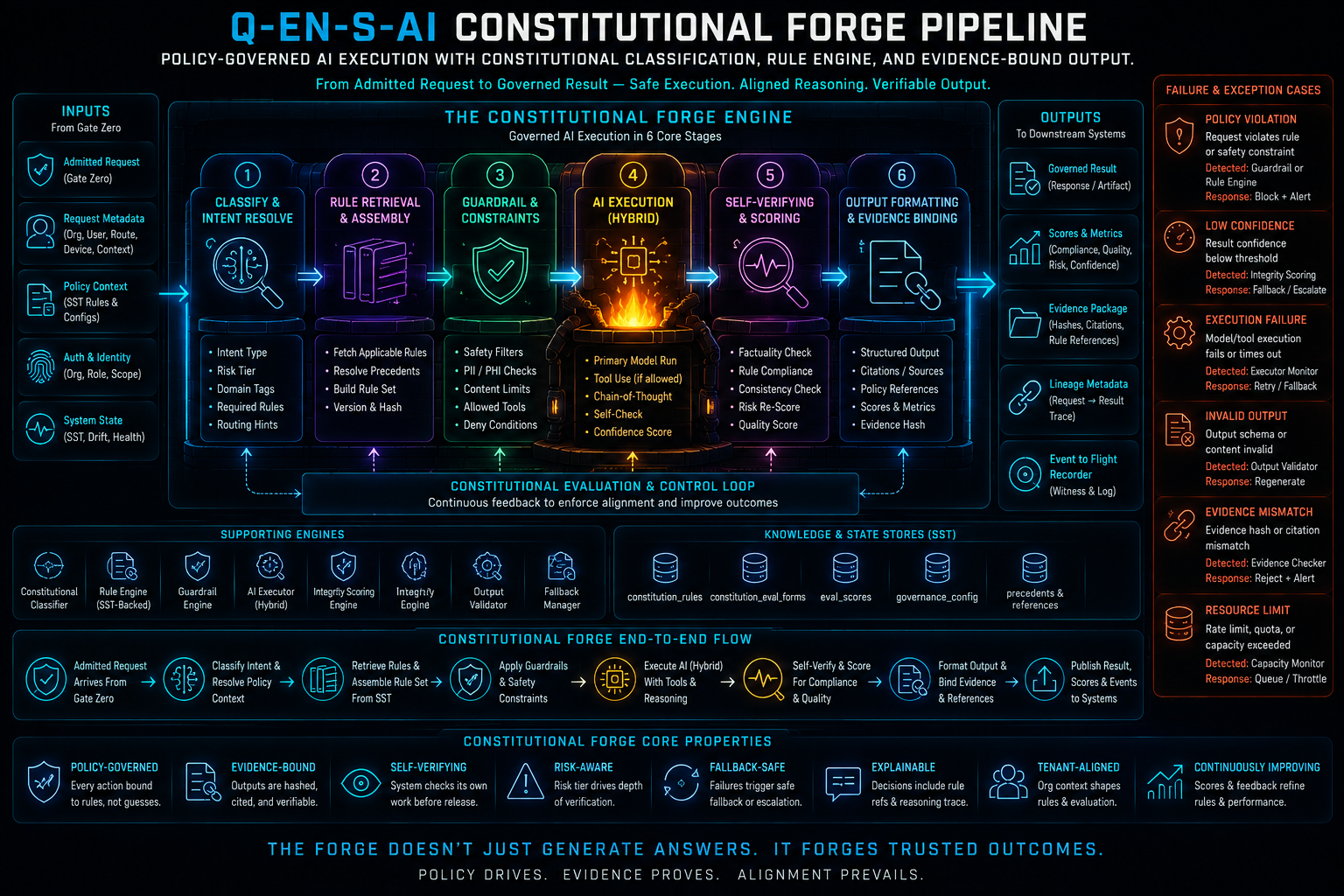
The loop's first full lap, recapped end to end: a promoted task surfaced two quiet gaps — an alignment score with no seat in the measure system, and a task with no lineage through the gate — and the operator's directive turned both into governance. A keyword-alignment measure was proposed from its nearest sibling, the canonical procedure was authored before any code, and a write path dead since birth was fixed, registered, and passed the gate the same hour.
Owner-gated agent operations. Every action behind your flip.
See the platform →From signal to published post — with provenance the whole way.
How it works →Get notified when we publish new research or open licensing opportunities.
Distributed intelligence has a difficult problem: how does a system preserve identity, authority, and integrity while its state is constantly changing? Traditional security models answer with credentials, permissions, and expiration times. Those mechanisms establish who may act, but they do not continuously prove that an action still belongs to the system state that originally authorized it.
Read the post →A file is not born governed. It is hash-stamped at birth, compared against everything that came before it, and earns canonical status only through a three-verifier gate.
Read the post →