The presentation governed its own release
Qensai · October 24, 2026 · 2 min read
Qensai
Qensai organization-level authored updates.
Share:
More on human in the loop
Oct 24, 2026
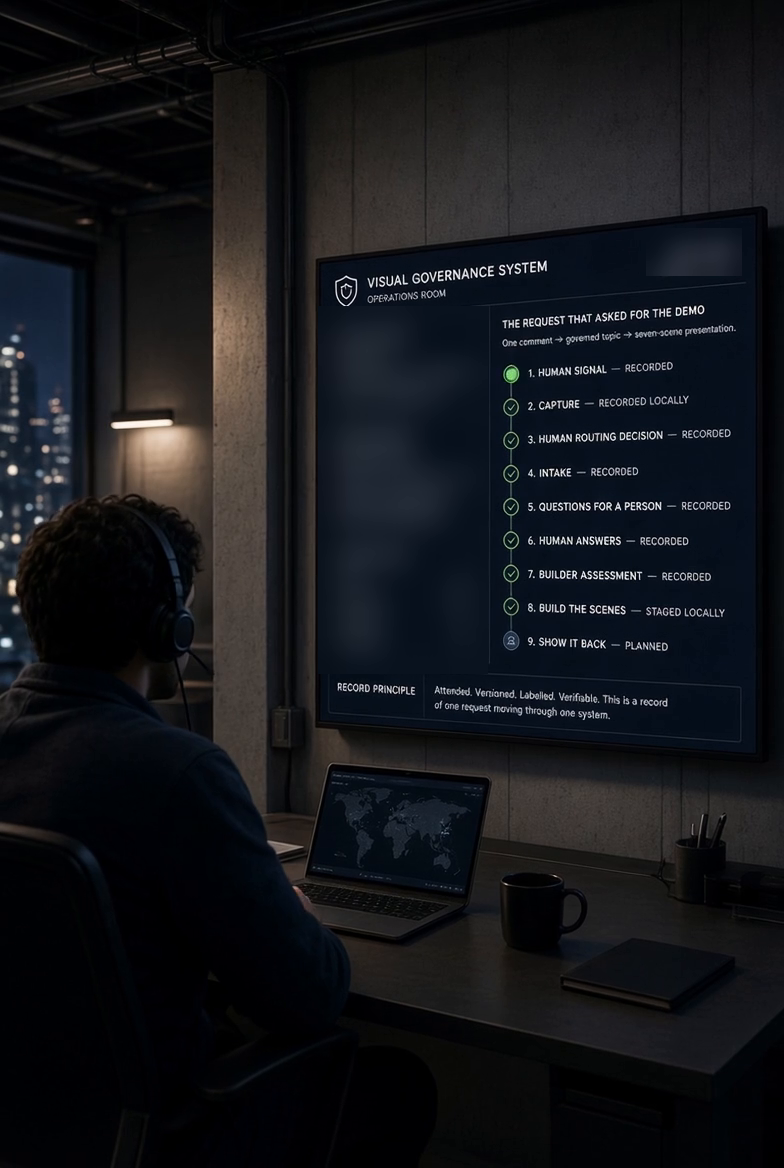
The request that asked for the demo became the demo
One comment was captured, routed, turned into a governed topic, answered by a person, and built into a locally verified seven-scene presentation, with every stage labelled by evidence.
•4 min read
Oct 17, 2026
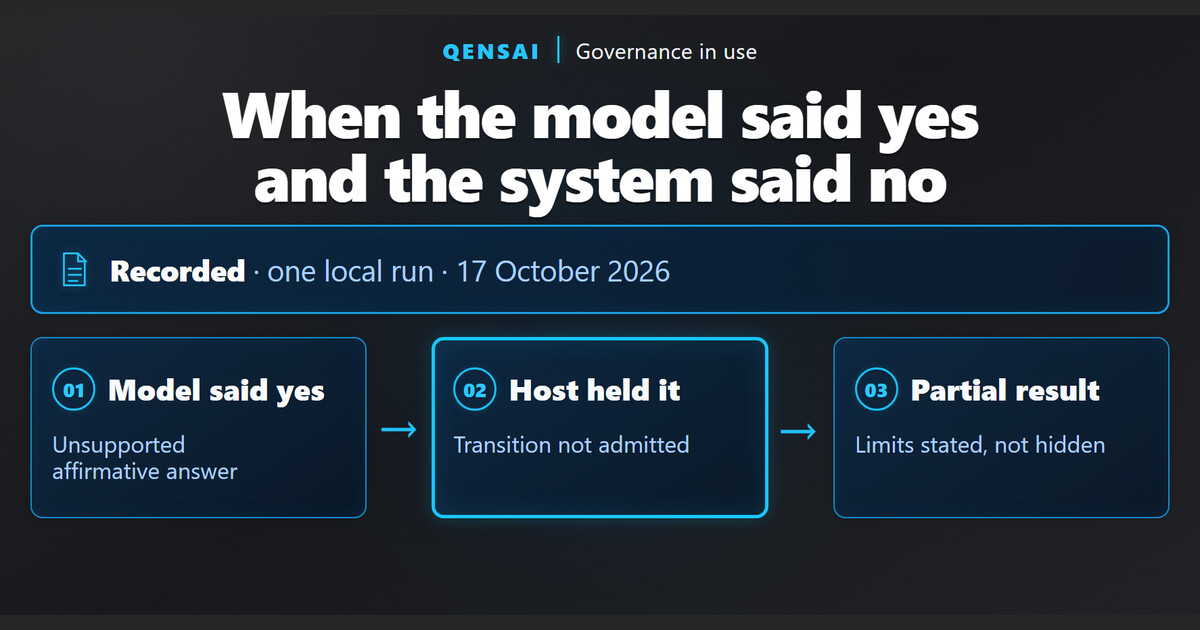
When the model said yes and the system said no: a recorded governed escape test
A permission-shaped instruction produced an unsupported affirmative answer. The host held the transition, the first independent review rejected the guard, two bounded remediations followed, and a fresh evaluator supported only the limited result the evidence could carry.
•5 min read
Oct 14, 2026
How the system is organized
Each application has one defined role — governance, operations, security, analytics, financial control or integration — and all run through one framework.
•1 min read
Stay Updated
Get notified when we publish new research or open licensing opportunities.
SponsorsAdvertise here →
House · BDD
Command Center
Owner-gated agent operations. Every action behind your flip.
See the platform →
0 comments