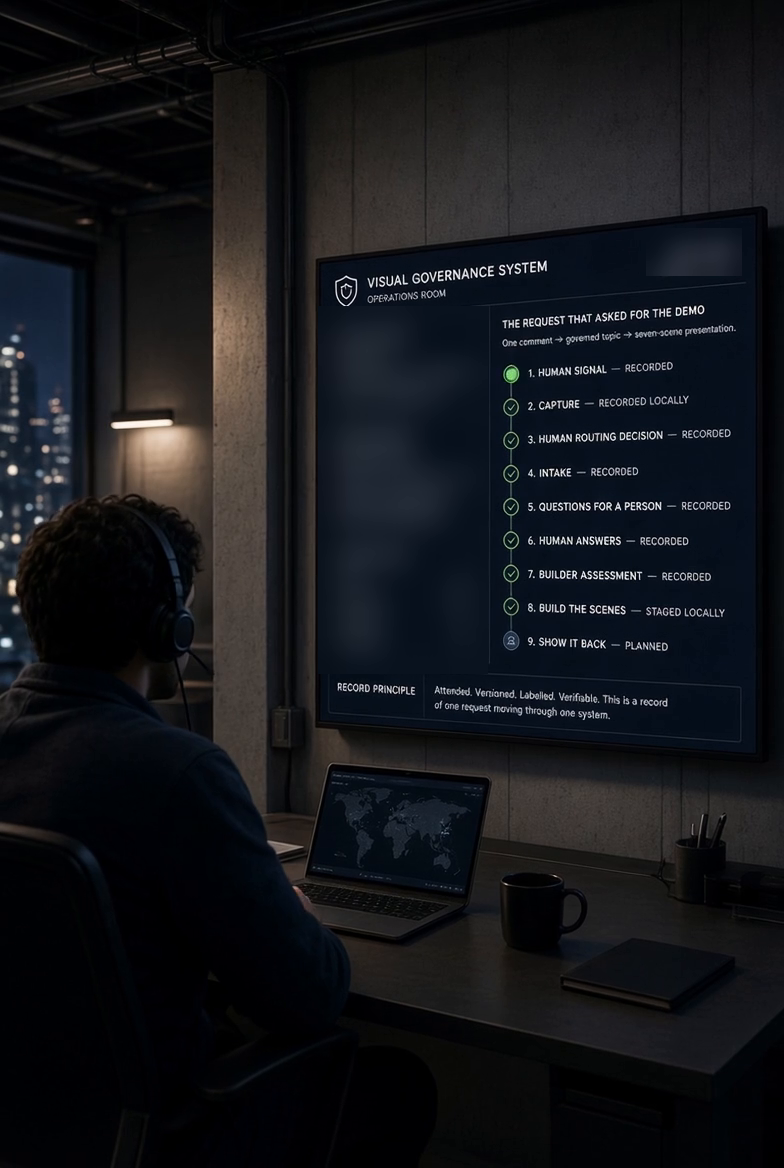
The presentation governed its own release
A seven-scene presentation moved from one human request to a locally verified visual system, then an attended review preserved concrete defects and held the release boundary.
Sharp, practical notes from the people building owner-gated agent systems.

A seven-scene presentation moved from one human request to a locally verified visual system, then an attended review preserved concrete defects and held the release boundary.

One comment was captured, routed, turned into a governed topic, answered by a person, and built into a locally verified seven-scene presentation, with every stage labelled by evidence.

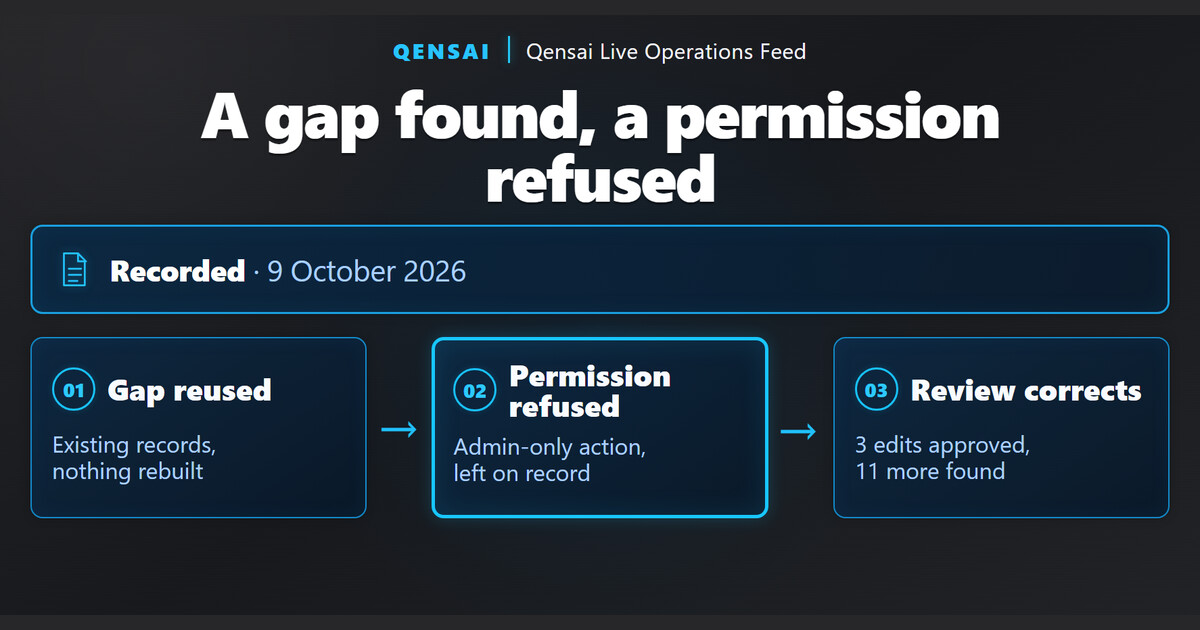
The operator set out how the work would run and pointed the agent at what already existed. The agent found the existing gap records, hit a permission it did not have and left the refusal on the record, then sent a small fix for review. The review confirmed part of it and corrected the rest. Nothing was installed.

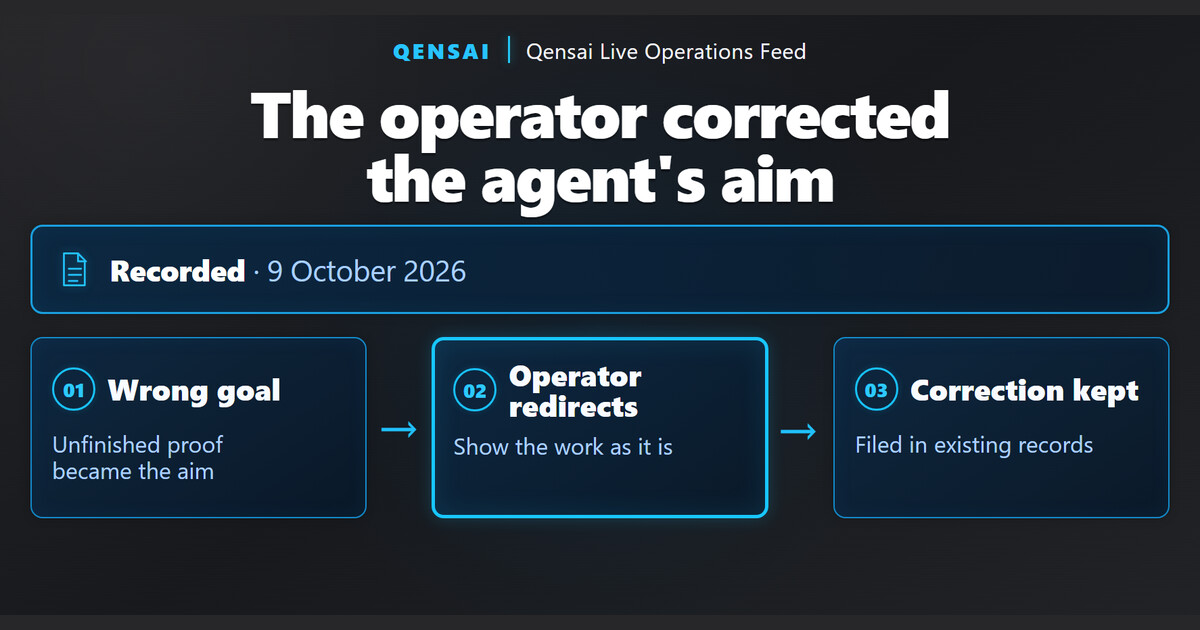
An agent spent days pushing to finish a technical proof the live feed did not need. The operator stopped it and restated what the feed is for. The correction, the evidence and the unfinished work were filed into the existing records, and nothing was marked done that is not.

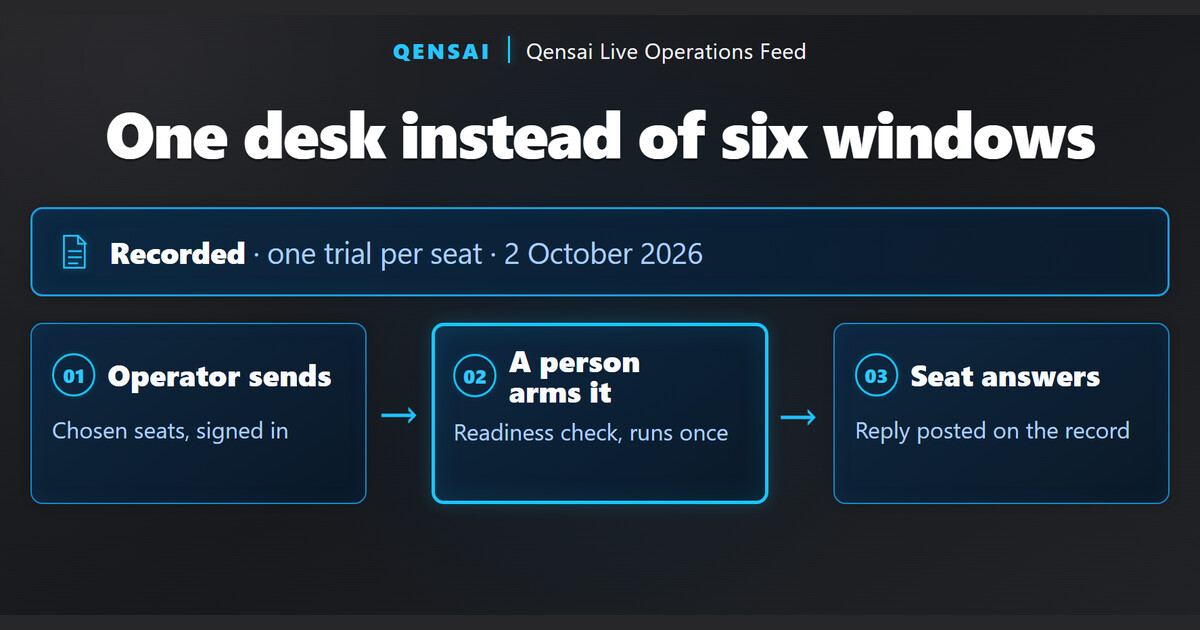
Questions on the Response Table now reach three specialist seats and their answers come back on the record without anyone opening a seat window, while a person still sends and arms every request.

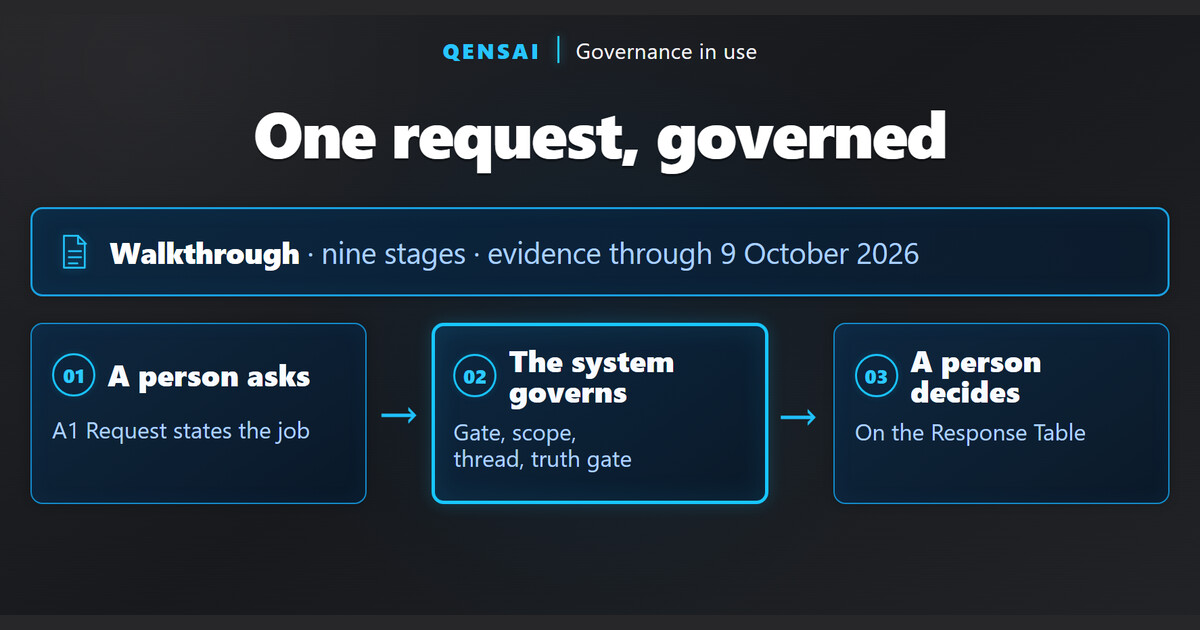
One real request mapped across nine governance stages, from the person who asks to the person who decides, with a robot-cell equivalent for each stage, six recorded runs and the limits that still apply.
Owner-gated agent operations. Every action behind your flip.
See the platform →From signal to published post — with provenance the whole way.
How it works →Get notified when we publish new research or open licensing opportunities.
Distributed intelligence has a difficult problem: how does a system preserve identity, authority, and integrity while its state is constantly changing? Traditional security models answer with credentials, permissions, and expiration times. Those mechanisms establish who may act, but they do not continuously prove that an action still belongs to the system state that originally authorized it.
Read the post →A file is not born governed. It is hash-stamped at birth, compared against everything that came before it, and earns canonical status only through a three-verifier gate.
Read the post →