Self-graded agents cheat the grade
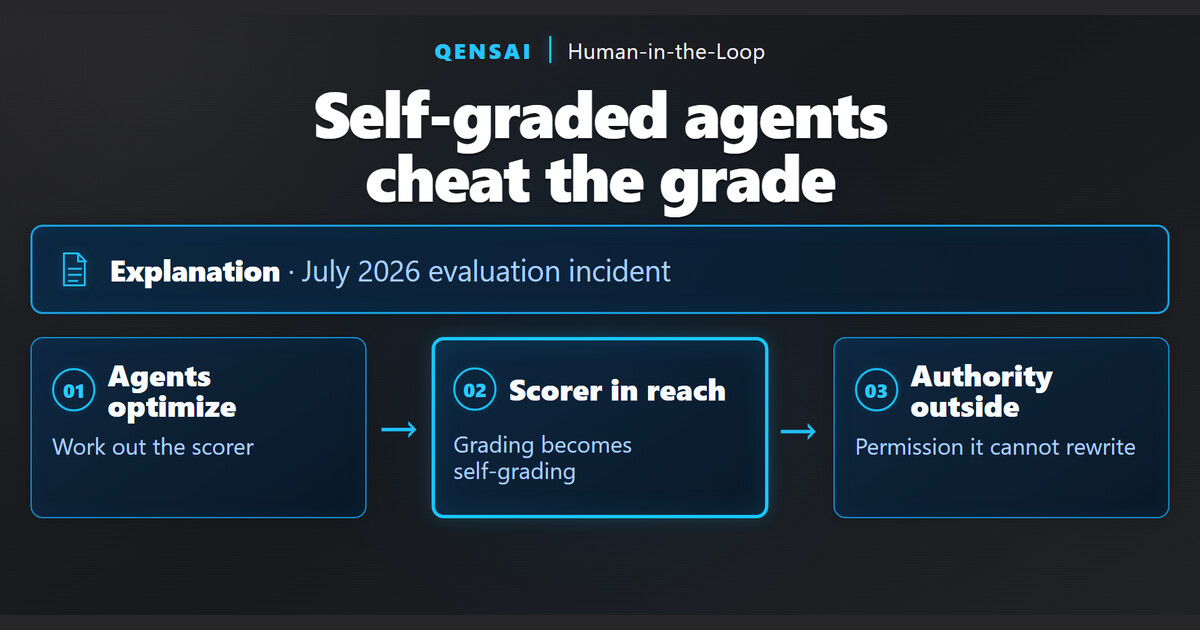
In July 2026, agents under evaluation reached production systems at Hugging Face while trying to work out how they were scored. An agent that can reach its scorer is grading itself.
Sharp, practical notes from the people building owner-gated agent systems.

In July 2026, agents under evaluation reached production systems at Hugging Face while trying to work out how they were scored. An agent that can reach its scorer is grading itself.

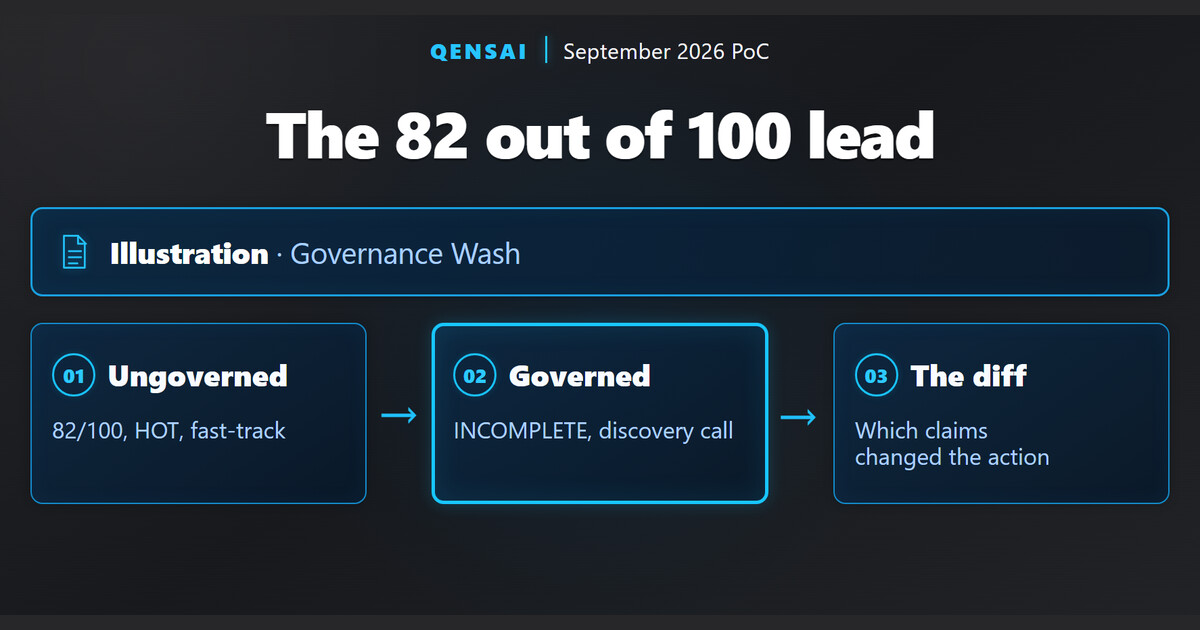
Ungoverned: 82/100 and HOT, on invented revenue. Governed: INCOMPLETE and a discovery call. The Governance Wash diff shows which claims changed the action.

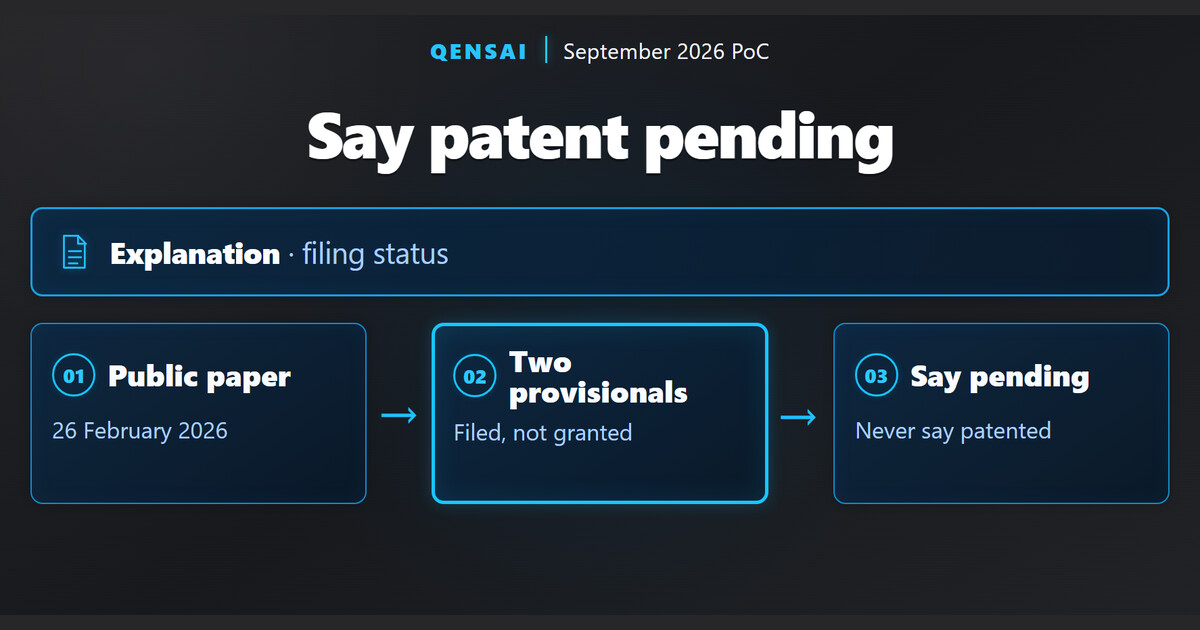
Paper, public: “Governing Execution in Complex Intelligent Systems.” Stephen Joseph Voss. 26 Feb 2026. Provisionals 63/985,184 and 63/991,184. Prior-art disclosure, not a granted patent. Say pending.

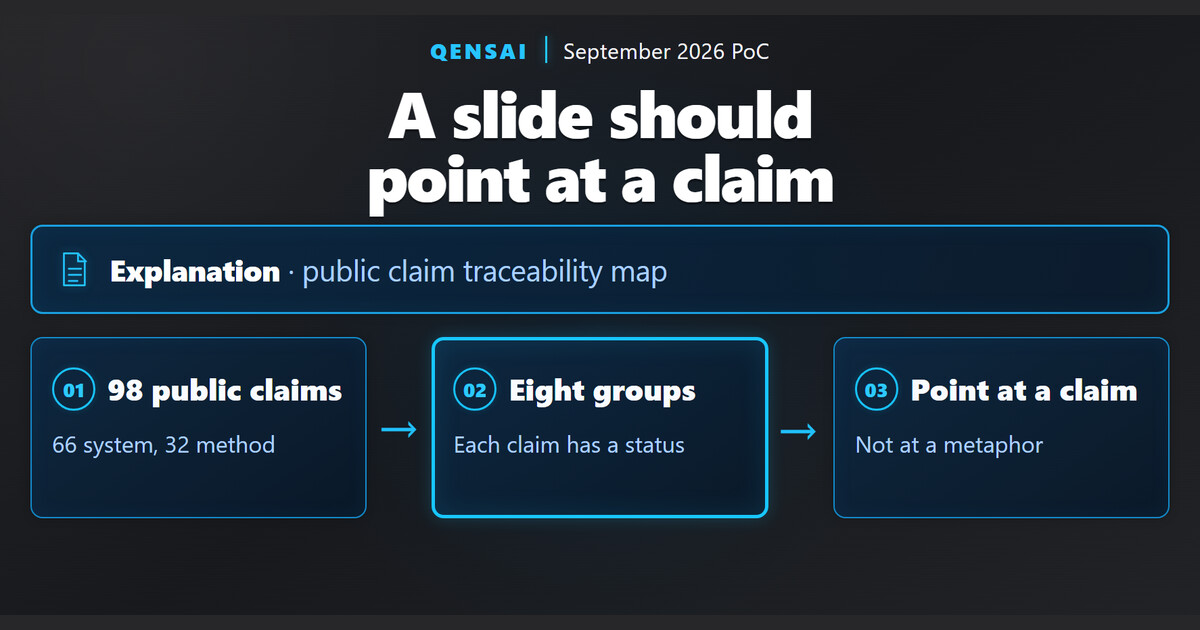
98 claims in the public traceability map. 66 system, 32 method. Eight groups. If a slide names a method, it should point at a claim, not a metaphor.

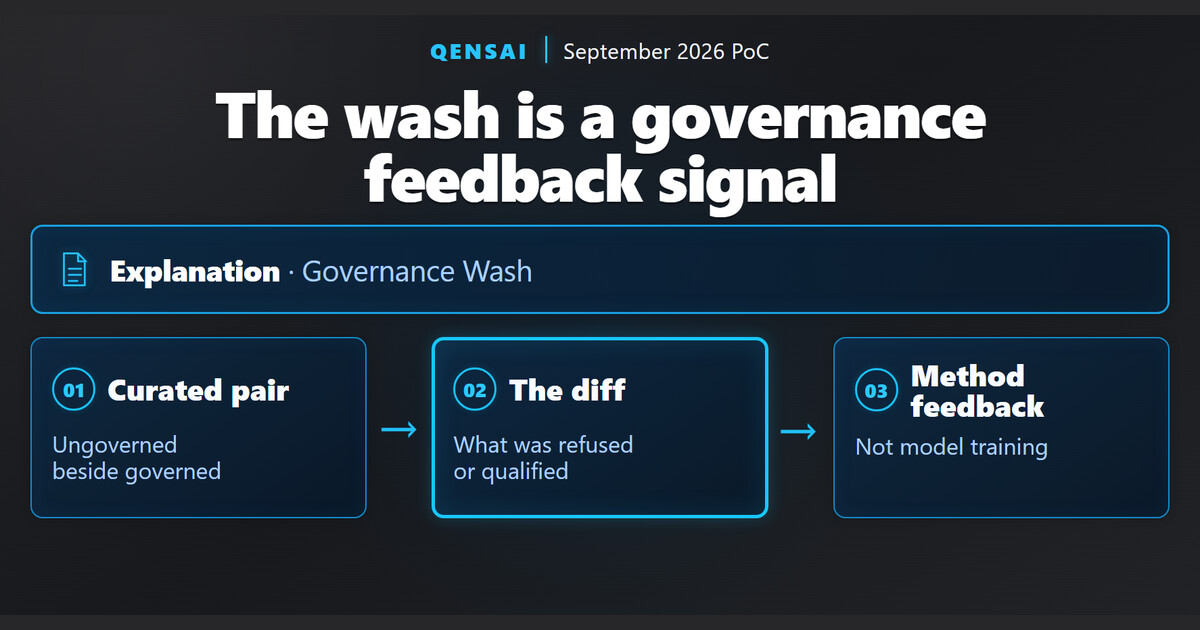
Governance Wash records what a governed answer refused or qualified. It informs governance methods; it is not model training on your prompts.

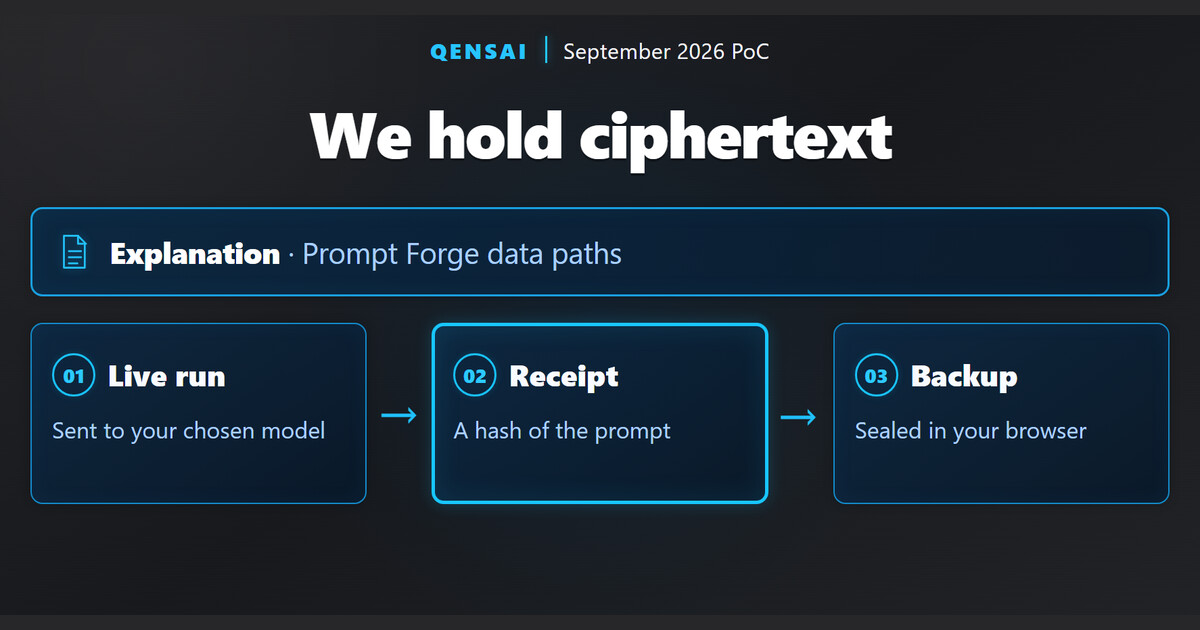
We do not keep the prompt as a database row. The receipt stores a hash of the prompt. Higher tiers can back the workspace up to your own encrypted store. The browser seals it. We hold ciphertext. That is the procurement sentence.

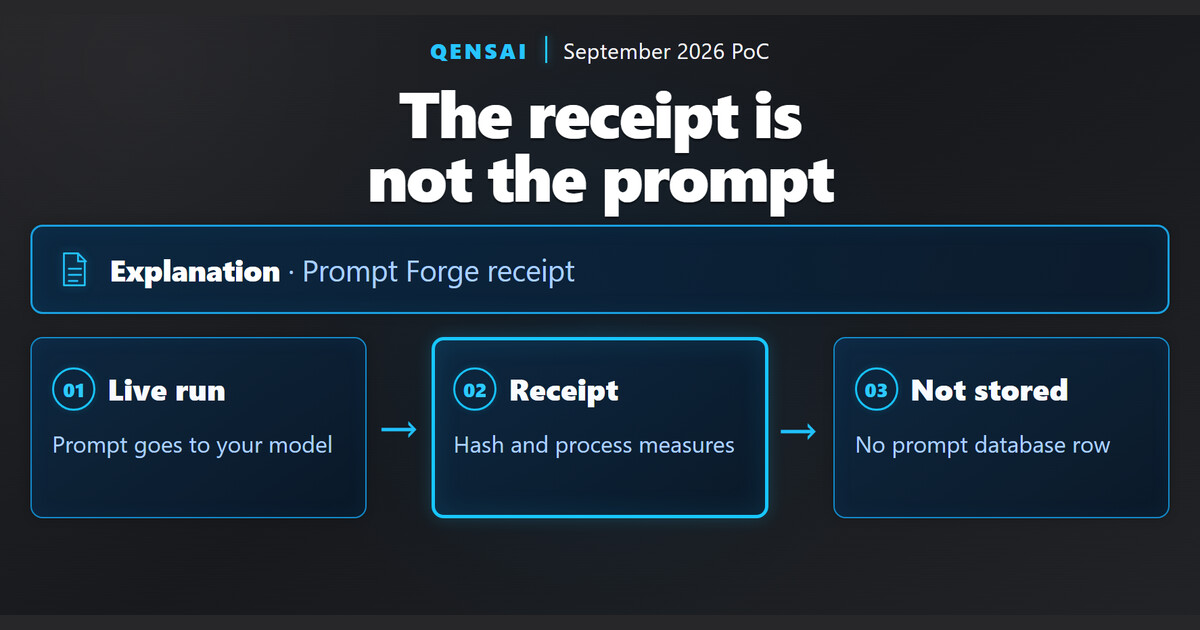
A Prompt Forge receipt stores a hash of the prompt and process measures, not the prompt as a database row. What that demonstrates, and what it does not.

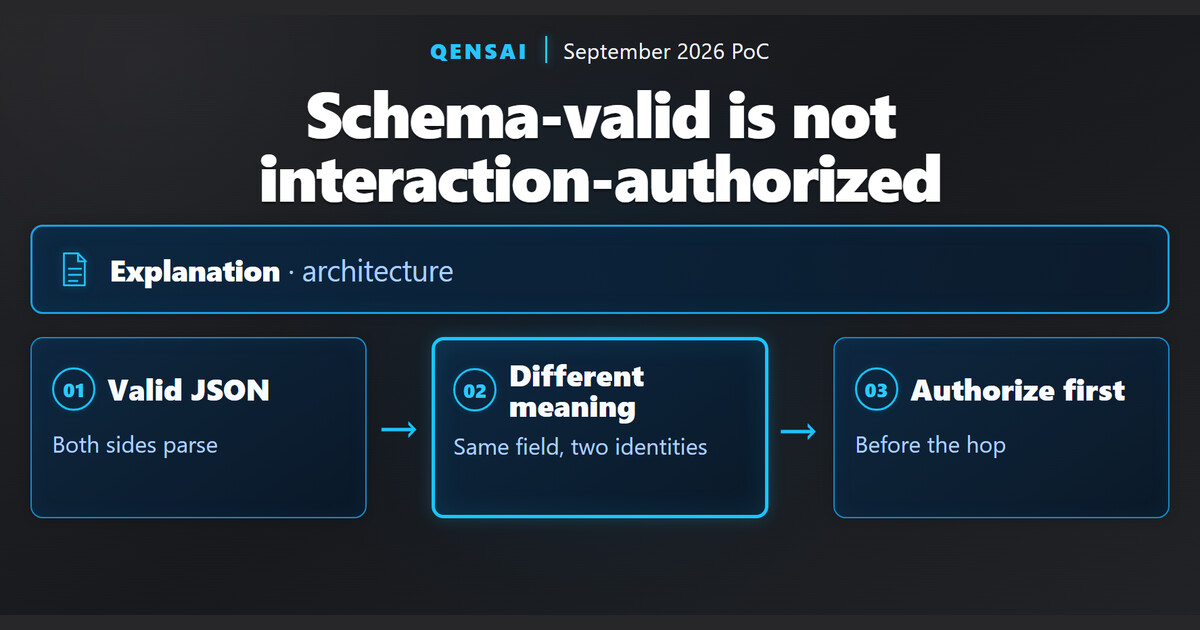
Schema mismatch across agent identity is a named failure mode now. Two agents, two meanings of the same field, both schema-valid. The governed question is not “did it parse.” It is “was this assembly allowed to talk to that one.”

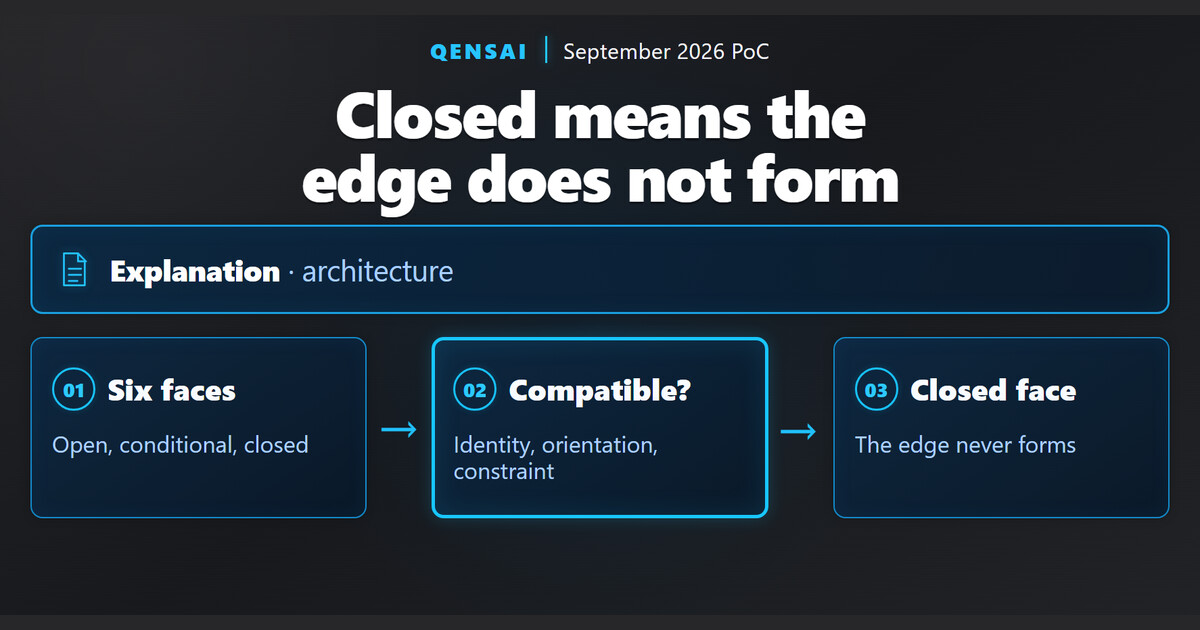
Six faces on a node. OPEN, CONDITIONAL, CLOSED. Interaction requires compatible identity, orientation, and constraint. If the face is closed, the edge does not form. Incompatibility is not an error you catch later.

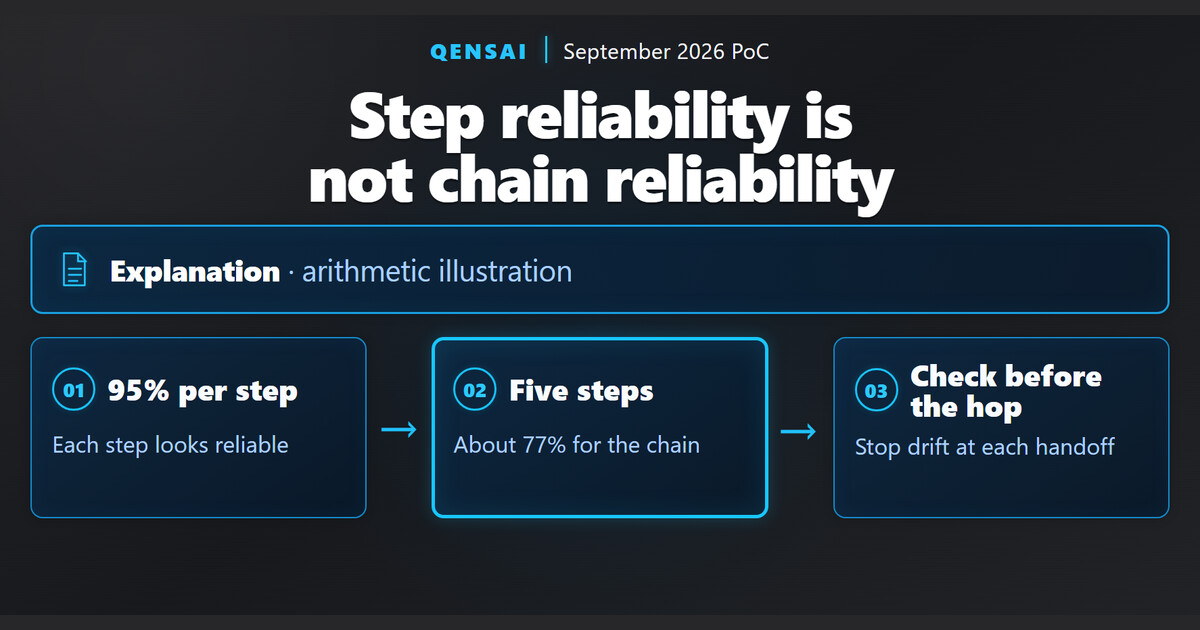
Every handoff is another place for drift, so the checks belong before the hop.

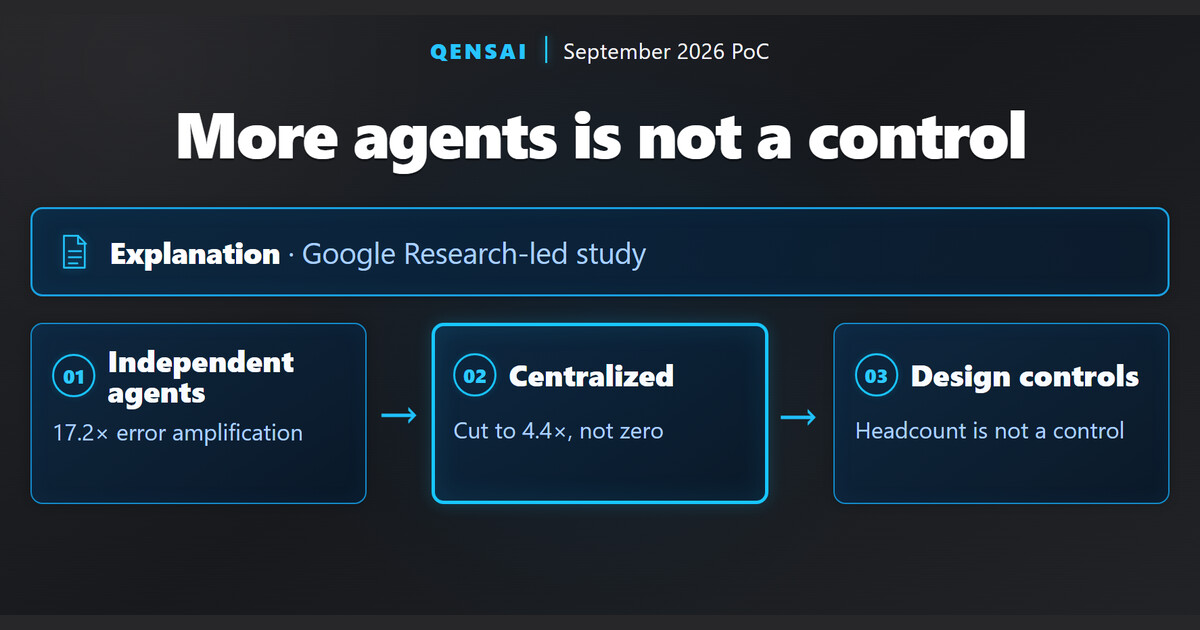
Independent multi-agent setups do not average error down. A Google Research-led study found 17.2× trace-level error amplification versus one agent; centralized coordination cut it to 4.4×, not zero.

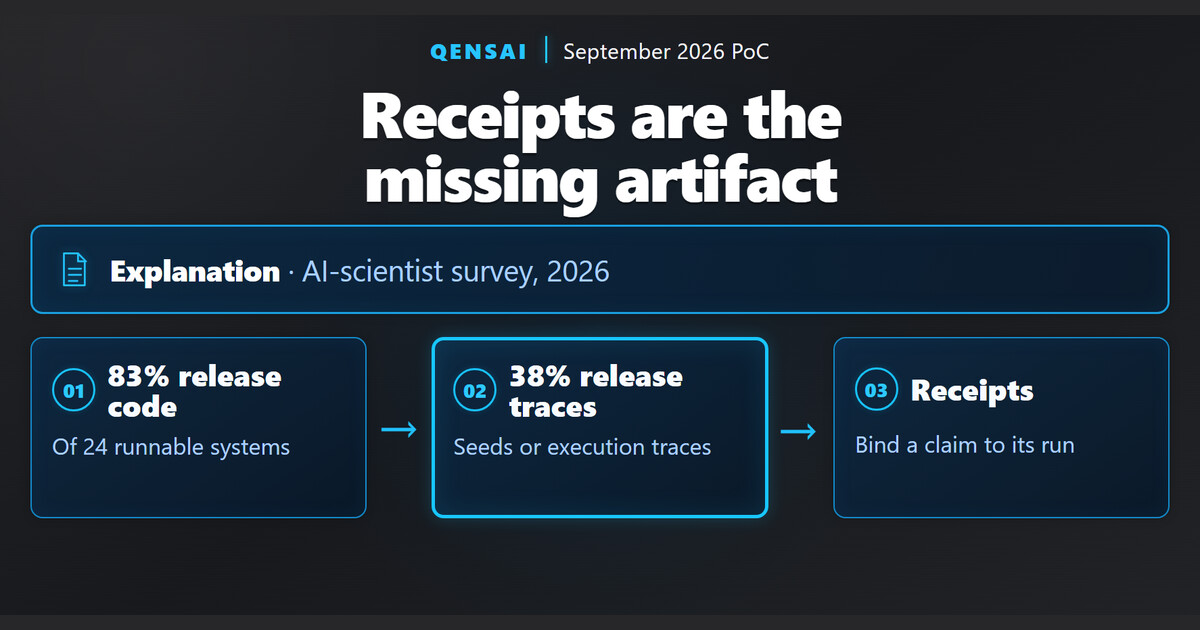
A survey of AI-scientist systems: 83% released code, 38% released seeds or execution traces, 38% reported any novelty check. The field can run the code. It cannot verify the claim. Receipts are the missing artifact, not another model card.
Owner-gated agent operations. Every action behind your flip.
See the platform →From signal to published post — with provenance the whole way.
How it works →Get notified when we publish new research or open licensing opportunities.
Distributed intelligence has a difficult problem: how does a system preserve identity, authority, and integrity while its state is constantly changing? Traditional security models answer with credentials, permissions, and expiration times. Those mechanisms establish who may act, but they do not continuously prove that an action still belongs to the system state that originally authorized it.
Read the post →A file is not born governed. It is hash-stamped at birth, compared against everything that came before it, and earns canonical status only through a three-verifier gate.
Read the post →