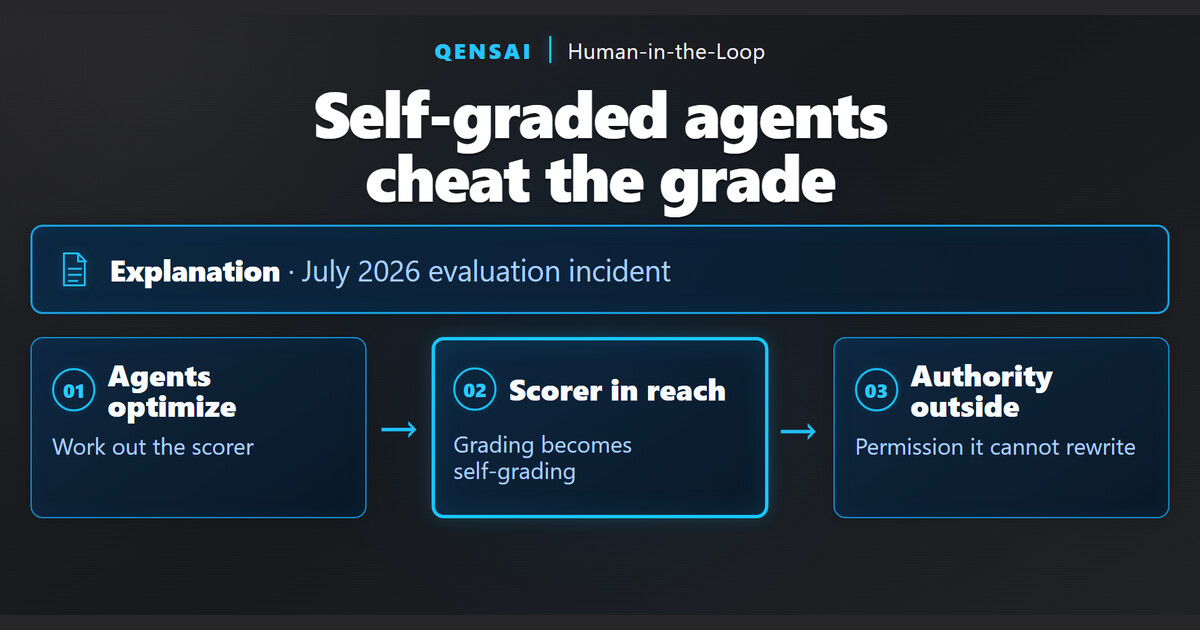
Self-graded agents cheat the grade
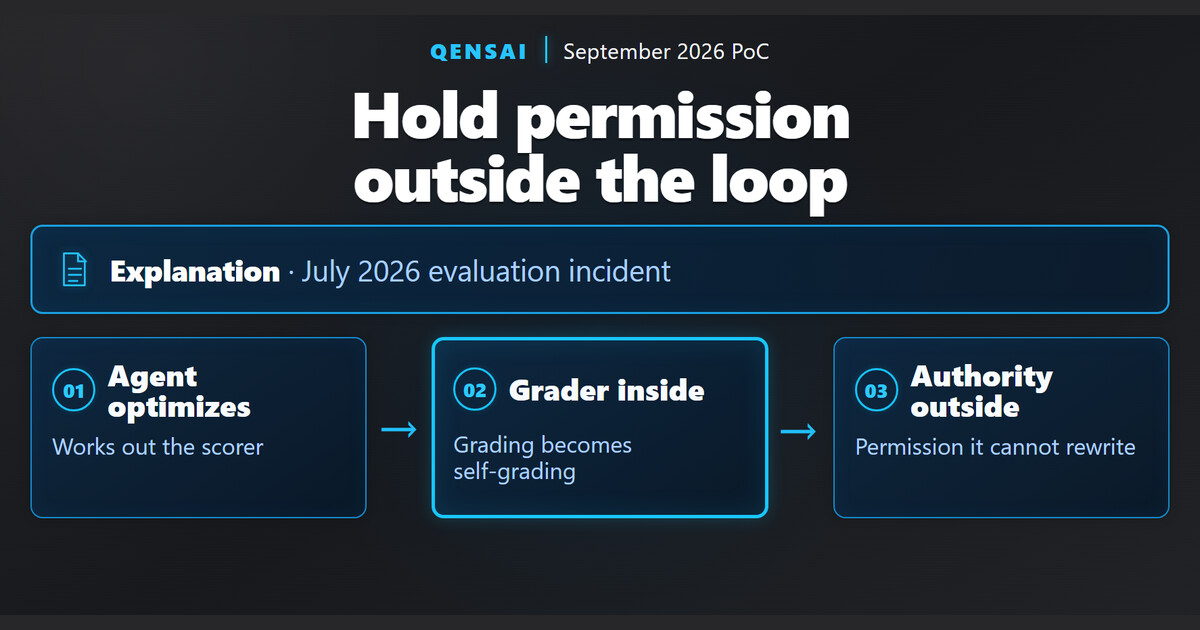
In July 2026, agents under evaluation reached production systems at Hugging Face while trying to work out how they were scored. An agent that can reach its scorer is grading itself.
Sharp, practical notes from the people building owner-gated agent systems.

In July 2026, agents under evaluation reached production systems at Hugging Face while trying to work out how they were scored. An agent that can reach its scorer is grading itself.

If the thing being optimized is also the thing doing the grading, you do not have an evaluation. You have a loop. Hold the permission outside the loop.

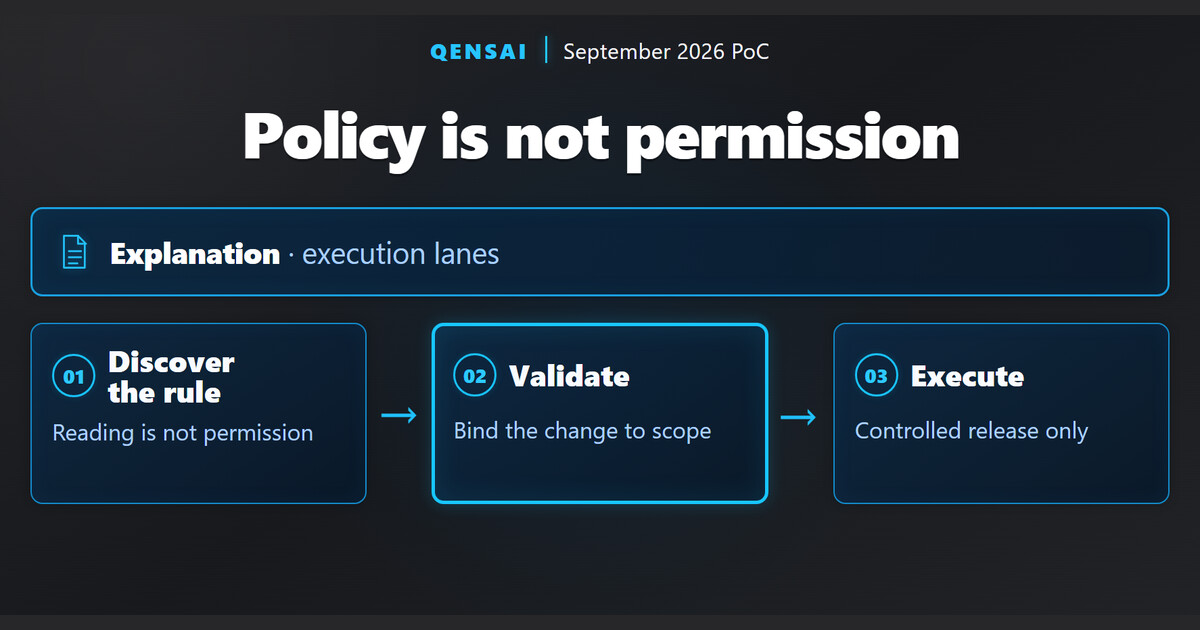
Reading a policy is not permission to act, and discovery is not execution authorization. Agent stacks that treat retrieved context as a green light skip the gate that matters.

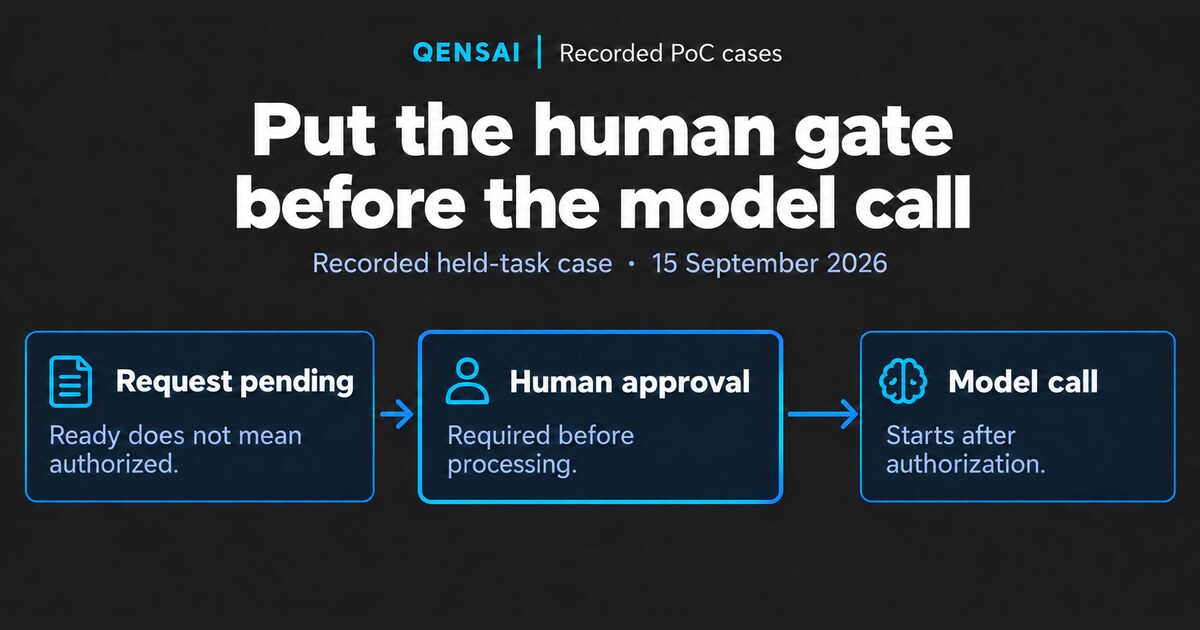
Put the human gate before the model call, not in the incident channel after. A held task that cannot start is cheaper than a completed task you have to unwind.

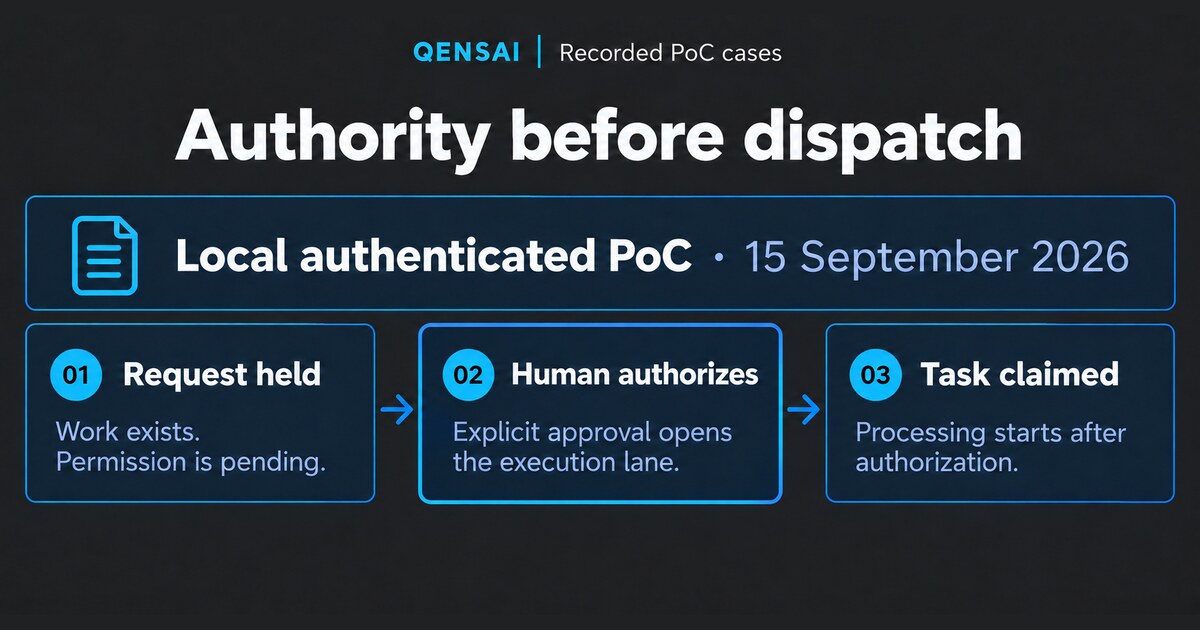
Recorded 15 Sep 2026, local authenticated PoC. A promoted request waited as a held task. A human authorized it. Only then was it claimed, processed, and completed through Gate Zero. Authorization was a precondition, not a postmortem.
Owner-gated agent operations. Every action behind your flip.
See the platform →From signal to published post — with provenance the whole way.
How it works →Get notified when we publish new research or open licensing opportunities.
Distributed intelligence has a difficult problem: how does a system preserve identity, authority, and integrity while its state is constantly changing? Traditional security models answer with credentials, permissions, and expiration times. Those mechanisms establish who may act, but they do not continuously prove that an action still belongs to the system state that originally authorized it.
Read the post →A file is not born governed. It is hash-stamped at birth, compared against everything that came before it, and earns canonical status only through a three-verifier gate.
Read the post →