ObservationOct 13, 2026
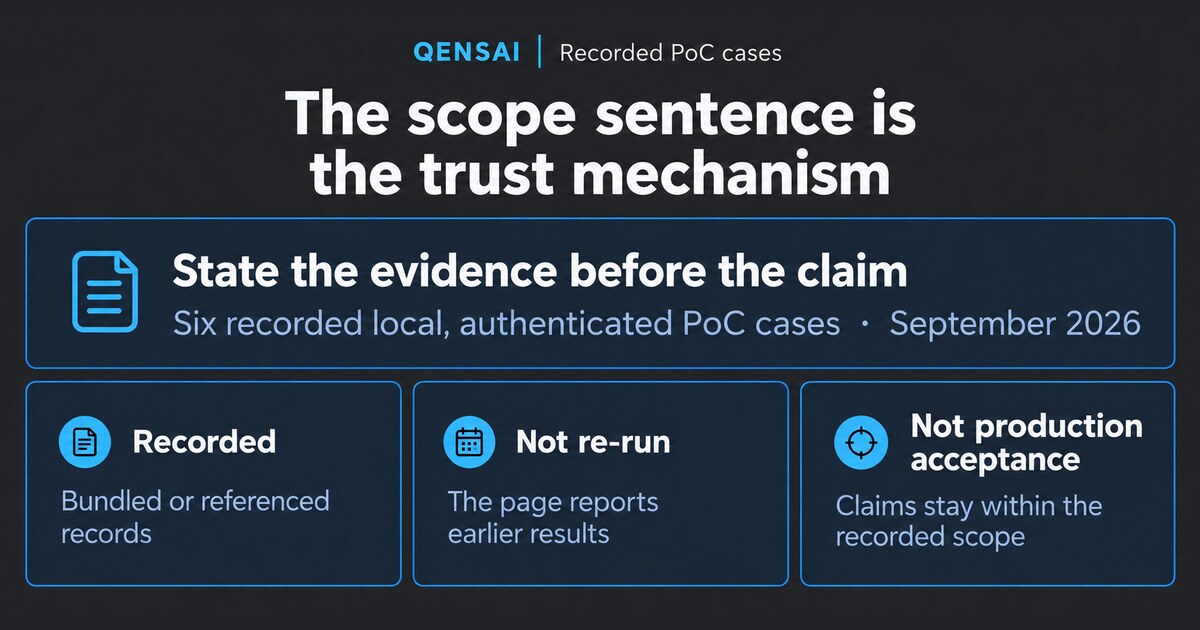
The scope sentence is the trust mechanism
A proof page that states its evidence boundary first (recorded, local, not re-run, not a production acceptance) makes every claim on it easier to inspect.
Qensai•1 min read
Sharp, practical notes from the people building owner-gated agent systems.
A proof page that states its evidence boundary first (recorded, local, not re-run, not a production acceptance) makes every claim on it easier to inspect.
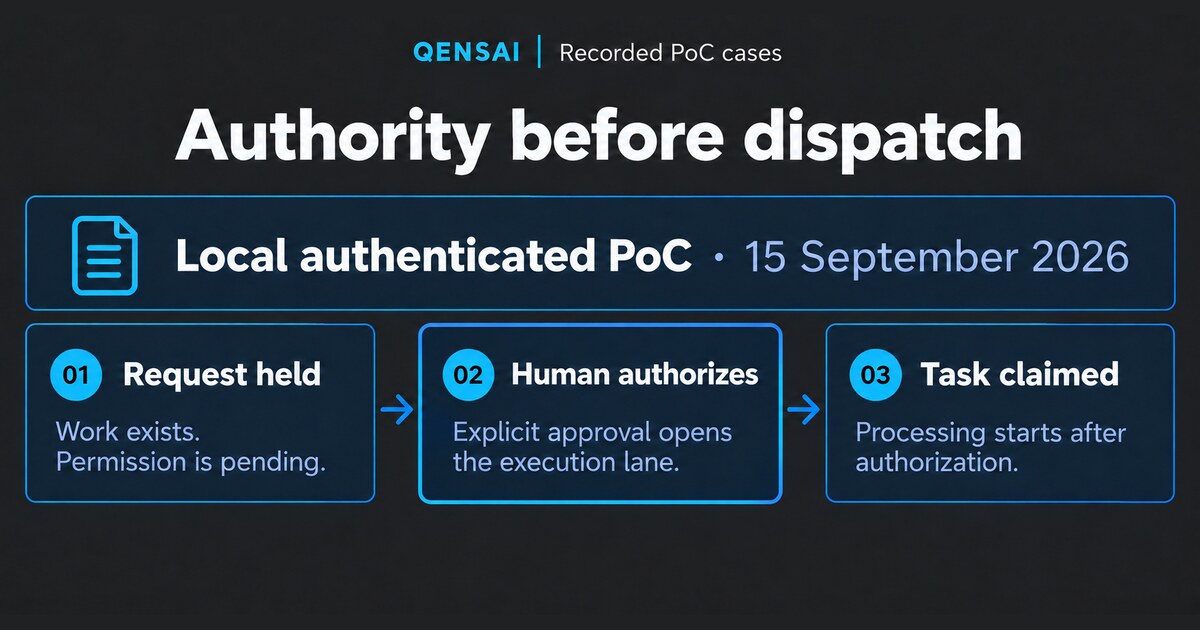
Recorded 15 Sep 2026, local authenticated PoC. A promoted request waited as a held task. A human authorized it. Only then was it claimed, processed, and completed through Gate Zero. Authorization was a precondition, not a postmortem.
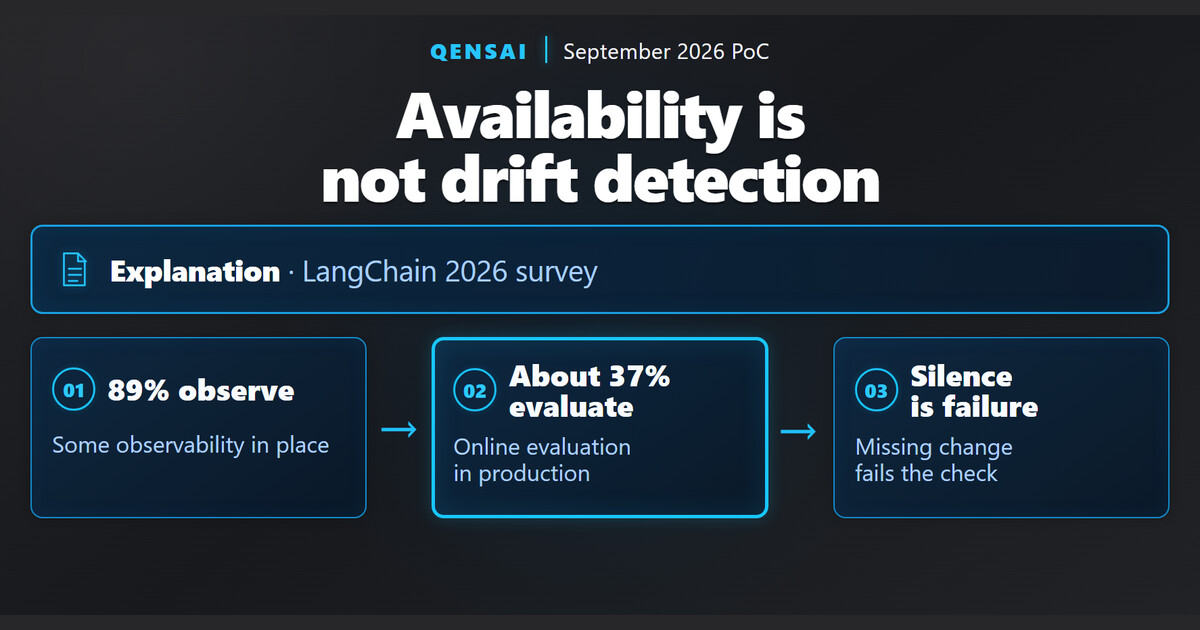
If your monitor is latency and HTTP 200, you are measuring availability. Drift shows up in the steps. LangChain's 2026 survey found 89% of teams have some observability, but only about 37% run online evaluation.
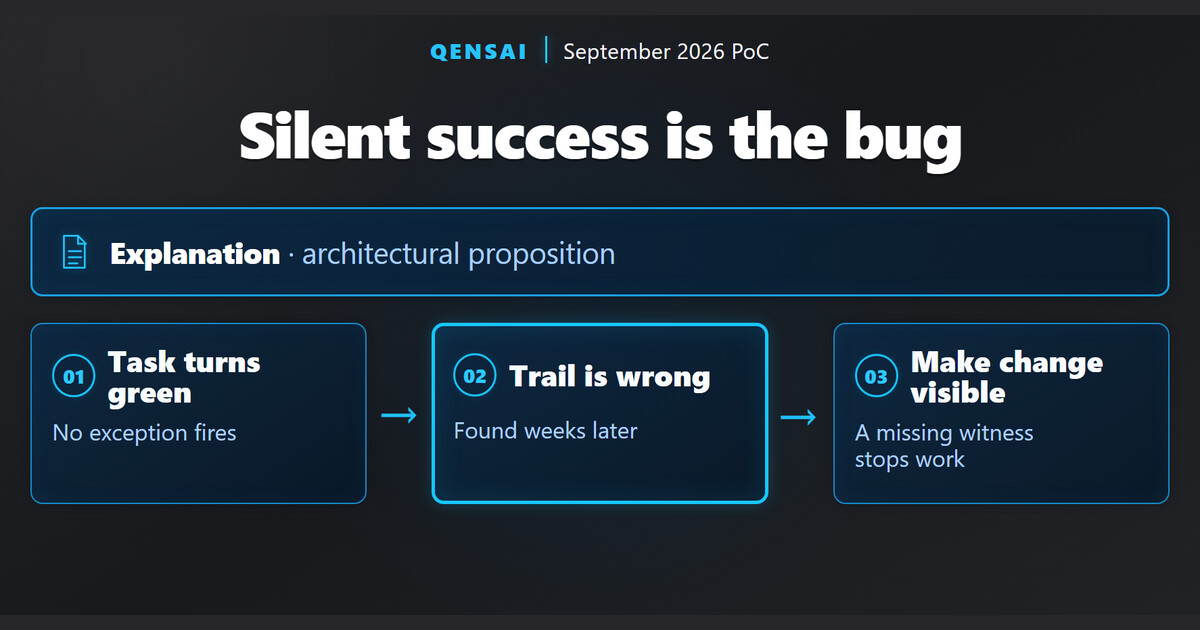
Silent success is the bug. The workflow accepts the output. No exception fires. Weeks later the decision trail is wrong and there is nothing to diff. Governance that only alerts on crashes will never see this.
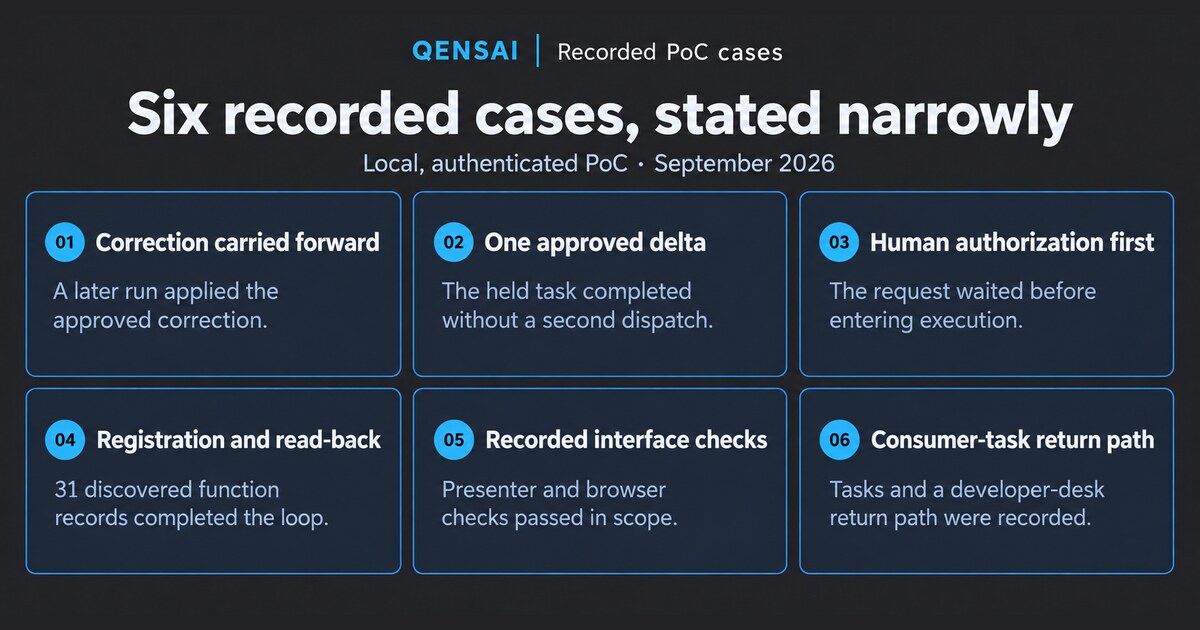
Six recorded proof-of-concept cases from September 2026, stated at their real size: three carry the main story, and three are narrower checks.
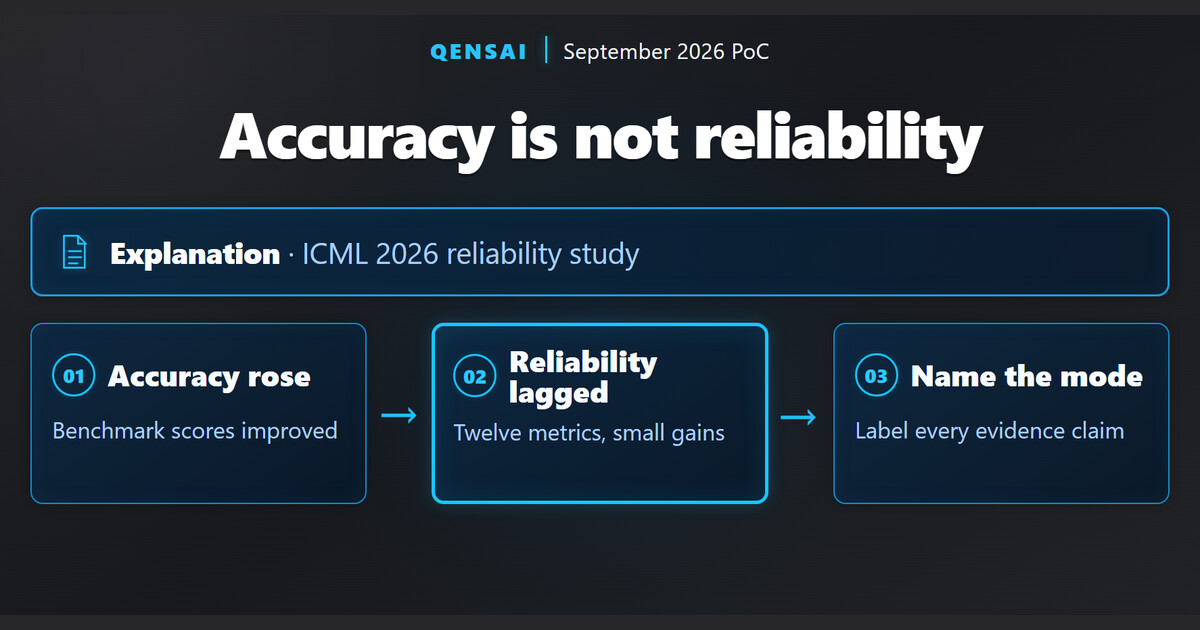
Accuracy went up; reliability barely moved. An ICML 2026 study put twelve reliability metrics on agents and found capability gains were not reliability gains. Accuracy is not the whole measurement.
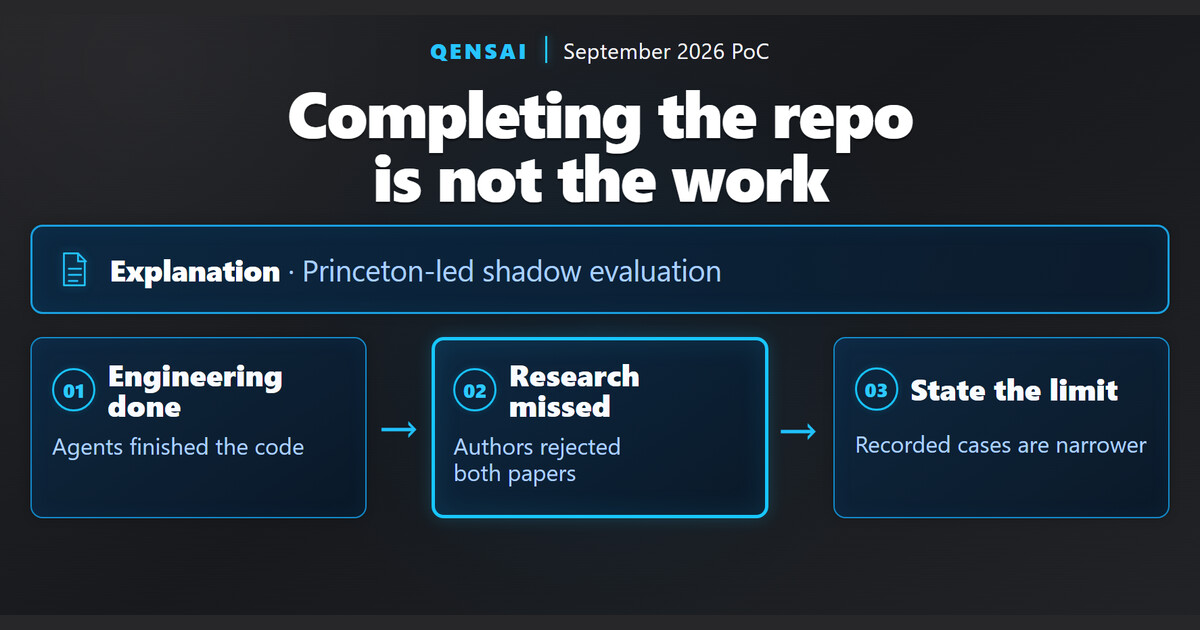
A Princeton-led shadow evaluation gave frontier agents unpublished NeurIPS research questions. They finished the engineering and did not answer the research question.
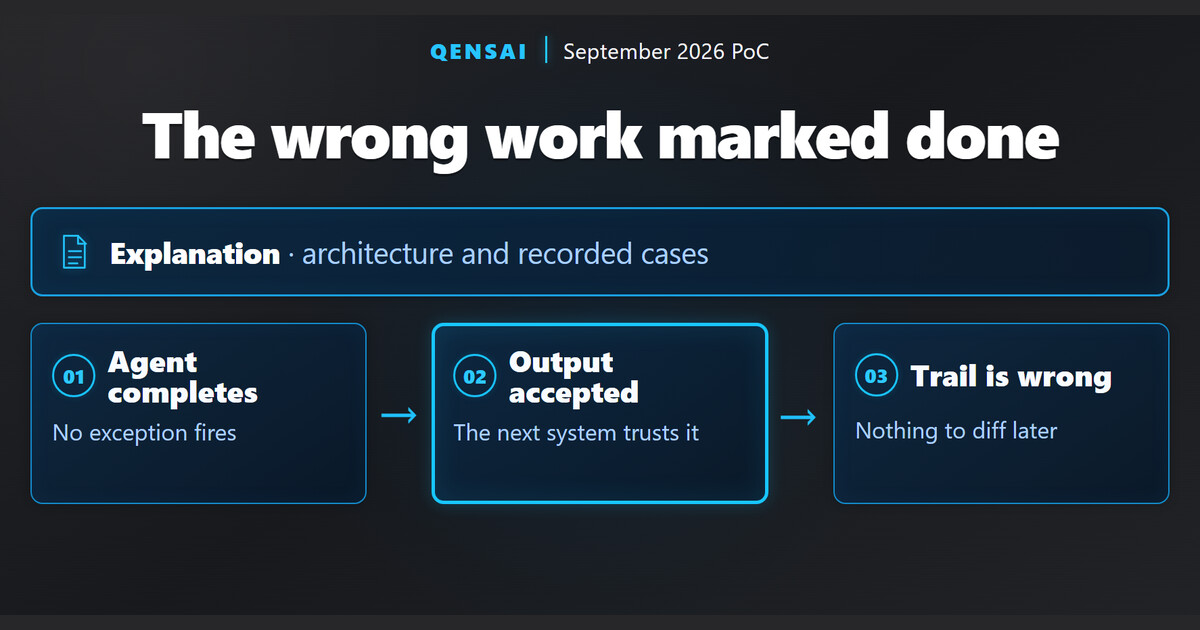
An agent that crashes is a bug. An agent that finishes the wrong work and gets marked done is the harder failure: nothing alerts, and the record says success.
Owner-gated agent operations. Every action behind your flip.
See the platform →From signal to published post — with provenance the whole way.
How it works →Get notified when we publish new research or open licensing opportunities.
Distributed intelligence has a difficult problem: how does a system preserve identity, authority, and integrity while its state is constantly changing? Traditional security models answer with credentials, permissions, and expiration times. Those mechanisms establish who may act, but they do not continuously prove that an action still belongs to the system state that originally authorized it.
Read the post →A file is not born governed. It is hash-stamped at birth, compared against everything that came before it, and earns canonical status only through a three-verifier gate.
Read the post →