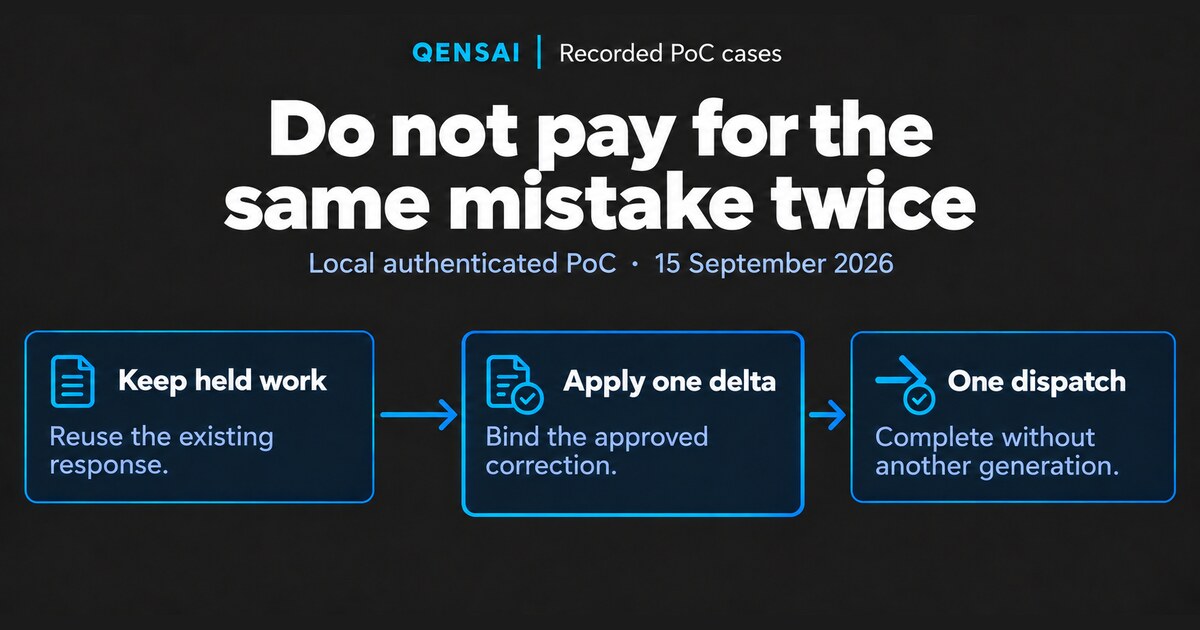
Do not pay for the same mistake twice
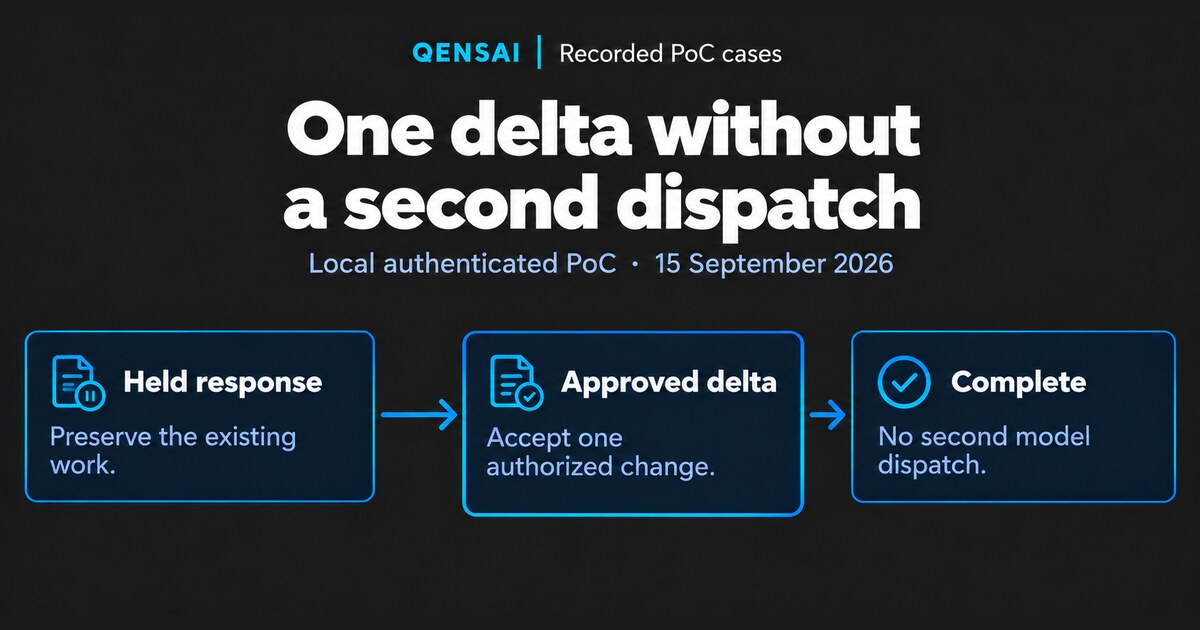
Dispatch, review, and redispatch start another generation for one approved change. One recorded checkpoint applied one approved delta to a held response without redispatching the model.
Sharp, practical notes from the people building owner-gated agent systems.

Dispatch, review, and redispatch start another generation for one approved change. One recorded checkpoint applied one approved delta to a held response without redispatching the model.

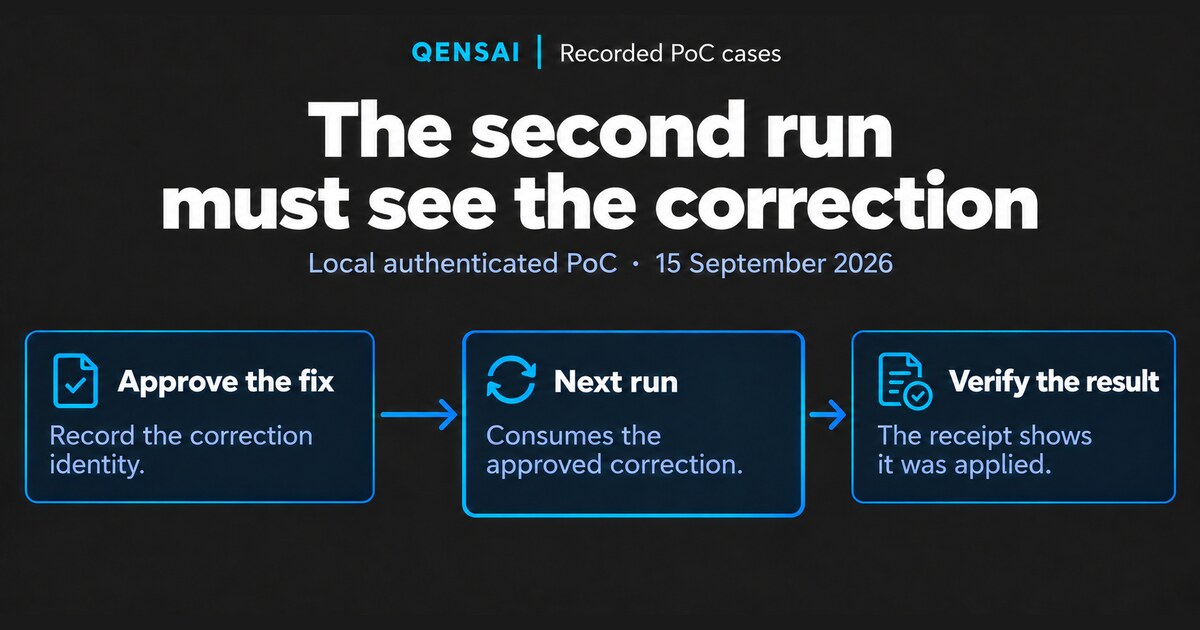
The expensive failure is often not the first wrong answer but the second run that never saw the approved correction. If the fix is absent from the next receipt, the governance loop remains unproven.

Recorded the same day. A held task accepted exactly one approved delta at its checkpoint and finished by reusing the held response. No second model dispatch. One change. No extra generation.

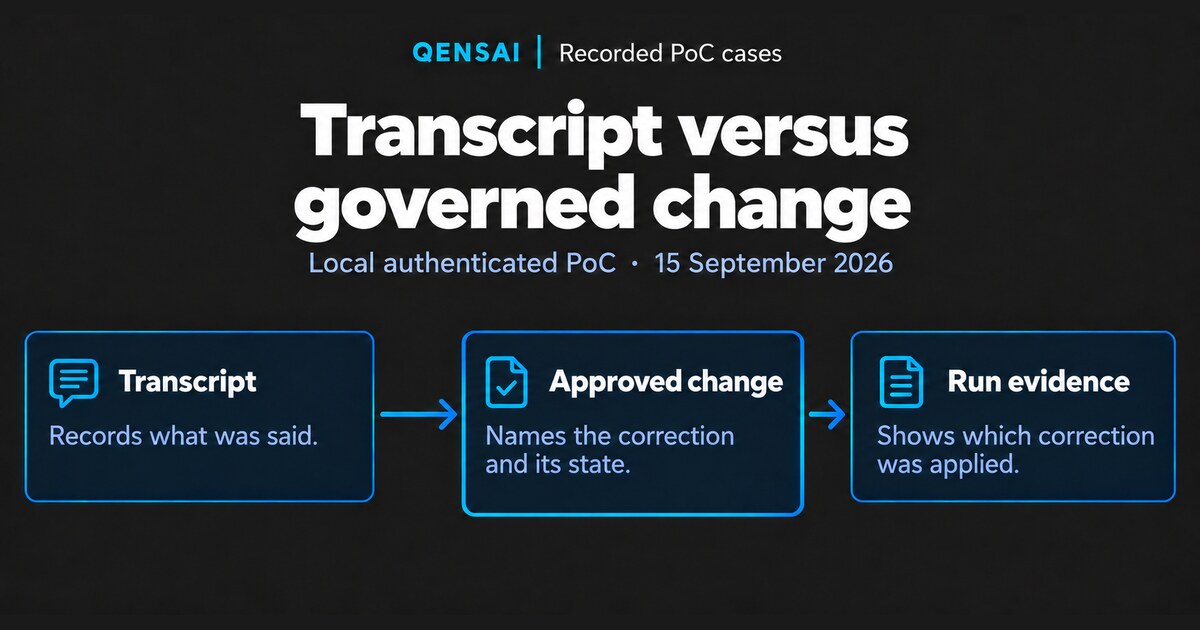
Much of what gets called memory is a transcript. A transcript does not know which line was approved; a receipt that cites the correction id does. That is the difference between a note and a governed change.

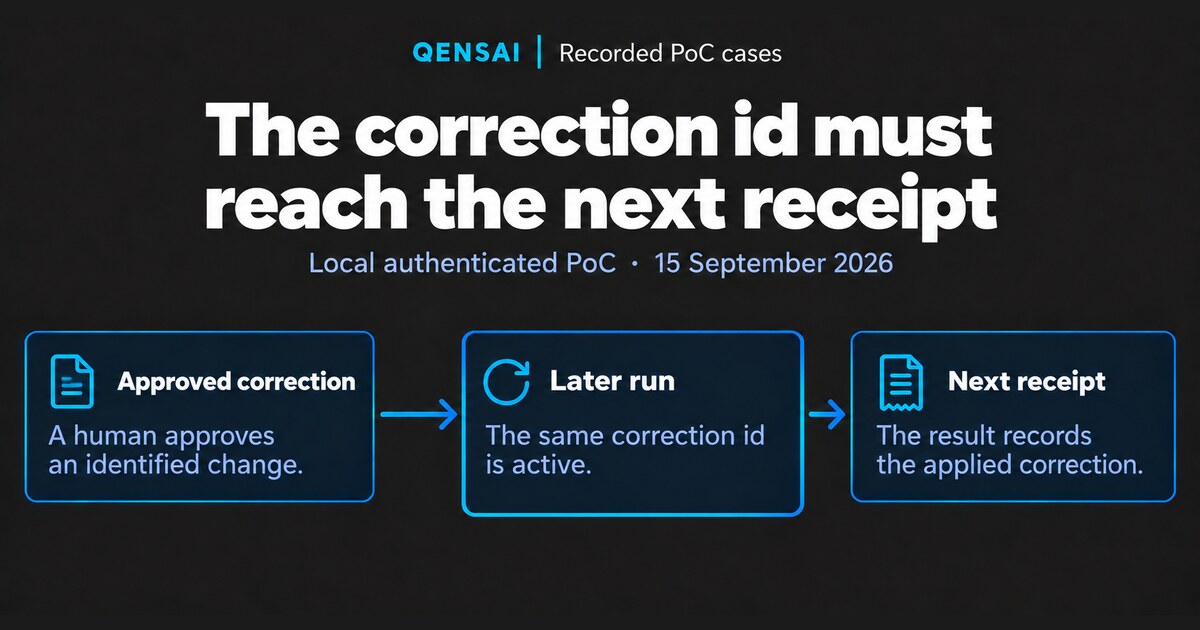
Recorded 15 Sep 2026. An operator approved a correction. A later Forge run applied it. The receipt names the same correction id as both active and rendered. The fix was not a chat comment. It was an input to the next run.
Owner-gated agent operations. Every action behind your flip.
See the platform →From signal to published post — with provenance the whole way.
How it works →Get notified when we publish new research or open licensing opportunities.
Distributed intelligence has a difficult problem: how does a system preserve identity, authority, and integrity while its state is constantly changing? Traditional security models answer with credentials, permissions, and expiration times. Those mechanisms establish who may act, but they do not continuously prove that an action still belongs to the system state that originally authorized it.
Read the post →A file is not born governed. It is hash-stamped at birth, compared against everything that came before it, and earns canonical status only through a three-verifier gate.
Read the post →