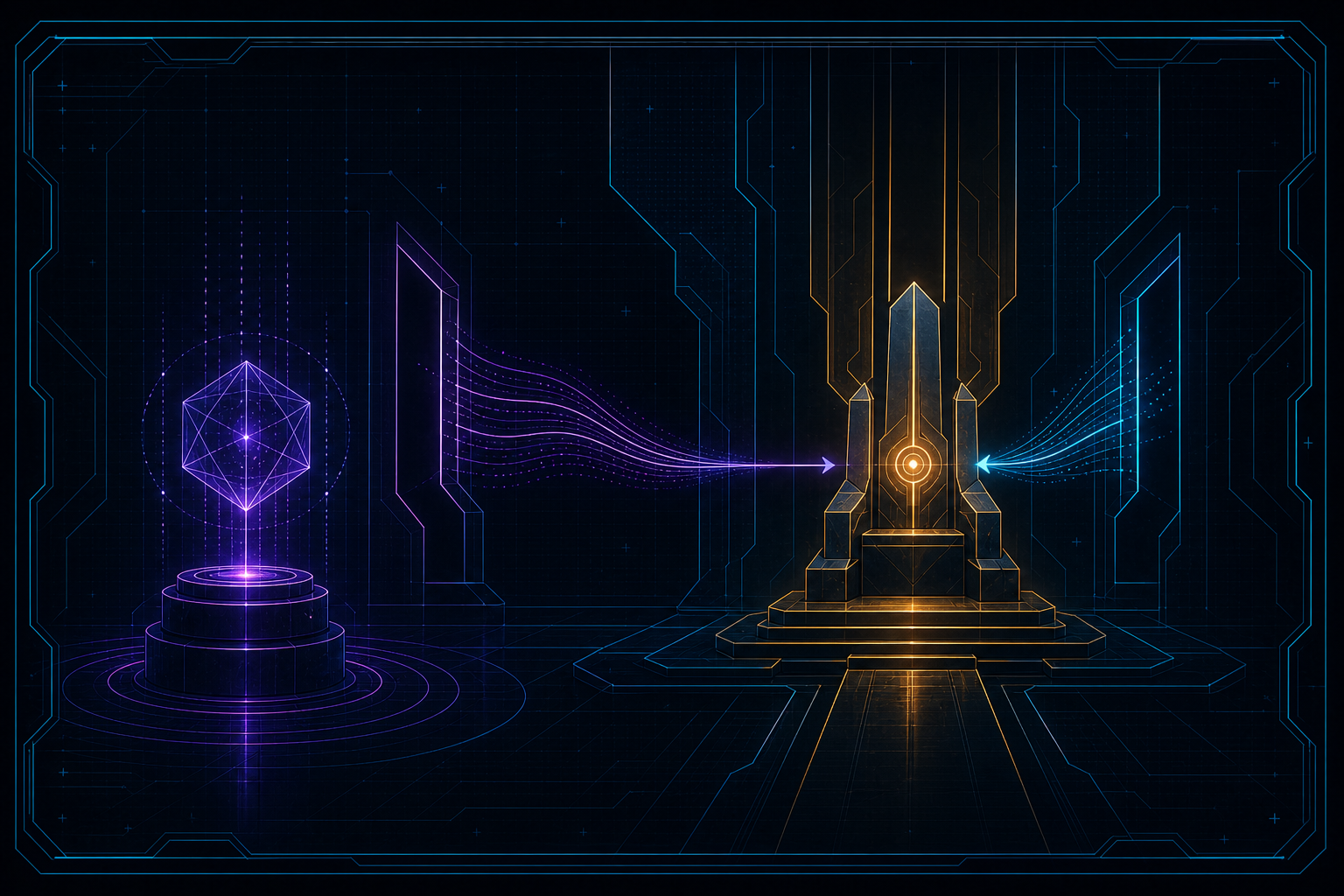
The Gate Is Three Readers
The live crossing is not one question but three, asked at once by three readers who cannot see each other's answers — and the checklist was never beside the gate; it was the gate. Part 6 of the Authentication series.
Sharp, practical notes from the people building owner-gated agent systems.

The live crossing is not one question but three, asked at once by three readers who cannot see each other's answers — and the checklist was never beside the gate; it was the gate. Part 6 of the Authentication series.

A debugging story about a legitimate admission control answering the wrong question inside a one-time authorization gate.
Owner-gated agent operations. Every action behind your flip.
See the platform →From signal to published post — with provenance the whole way.
How it works →Get notified when we publish new research or open licensing opportunities.
Distributed intelligence has a difficult problem: how does a system preserve identity, authority, and integrity while its state is constantly changing? Traditional security models answer with credentials, permissions, and expiration times. Those mechanisms establish who may act, but they do not continuously prove that an action still belongs to the system state that originally authorized it.
Read the post →A file is not born governed. It is hash-stamped at birth, compared against everything that came before it, and earns canonical status only through a three-verifier gate.
Read the post →