A System of Specialists, Not One Giant Brain
A System of Specialists, Not One Giant Brain
Qensai became easier to understand when we stopped imagining one AI doing everything and started giving different systems different jobs.
The shift began inside our development work.
We had multiple projects open in VS Code, spread across multiple repositories. Each project had its own code, context, problems, and history. Instead of asking one chatbot to remember every detail about all of them, we began working with a bot inside each project.
That solved one problem immediately. An agent working directly with a project could focus on the files and responsibilities in front of it. It did not need every piece of unrelated context from the rest of the organization before it could be useful.
But specialization created a new question: how should all of those agents work together?
The simplest comparison is a toolbox. A wrench, a meter, and a drill may all belong to the same technician, but they are not interchangeable. Their usefulness comes from having different purposes. Asking one tool to perform every job would not make the toolbox simpler. It would make the work less reliable.
Our agents developed in a similar way. Each one was configured and equipped for defined responsibilities. One might work closely with a particular application. Another might focus on coordination, security, analysis, or reviewing whether required criteria had been met. The value was not that every agent knew everything. The value was that each one could know what it was responsible for.
That distinction matters because Qensai is not intended to be one giant brain controlling every part of the operation.
Qensai Forge is the clearest public example. It is the consumer-facing AI experience—the place where a person can work with AI without needing to understand the internal systems supporting that experience. But Forge does not need to become the security layer, the task coordinator, the analytics system, the content operation, and every domain-specific application at once.
Those responsibilities can remain separate.
Behind the public experience, we use functional layers: a control plane for coordinating governed work, a governance framework for defining how work should be handled, a security and identity layer for boundaries, a coordination and memory layer for shared context, and an execution and routing layer for sending appropriate work to an appropriate capability.
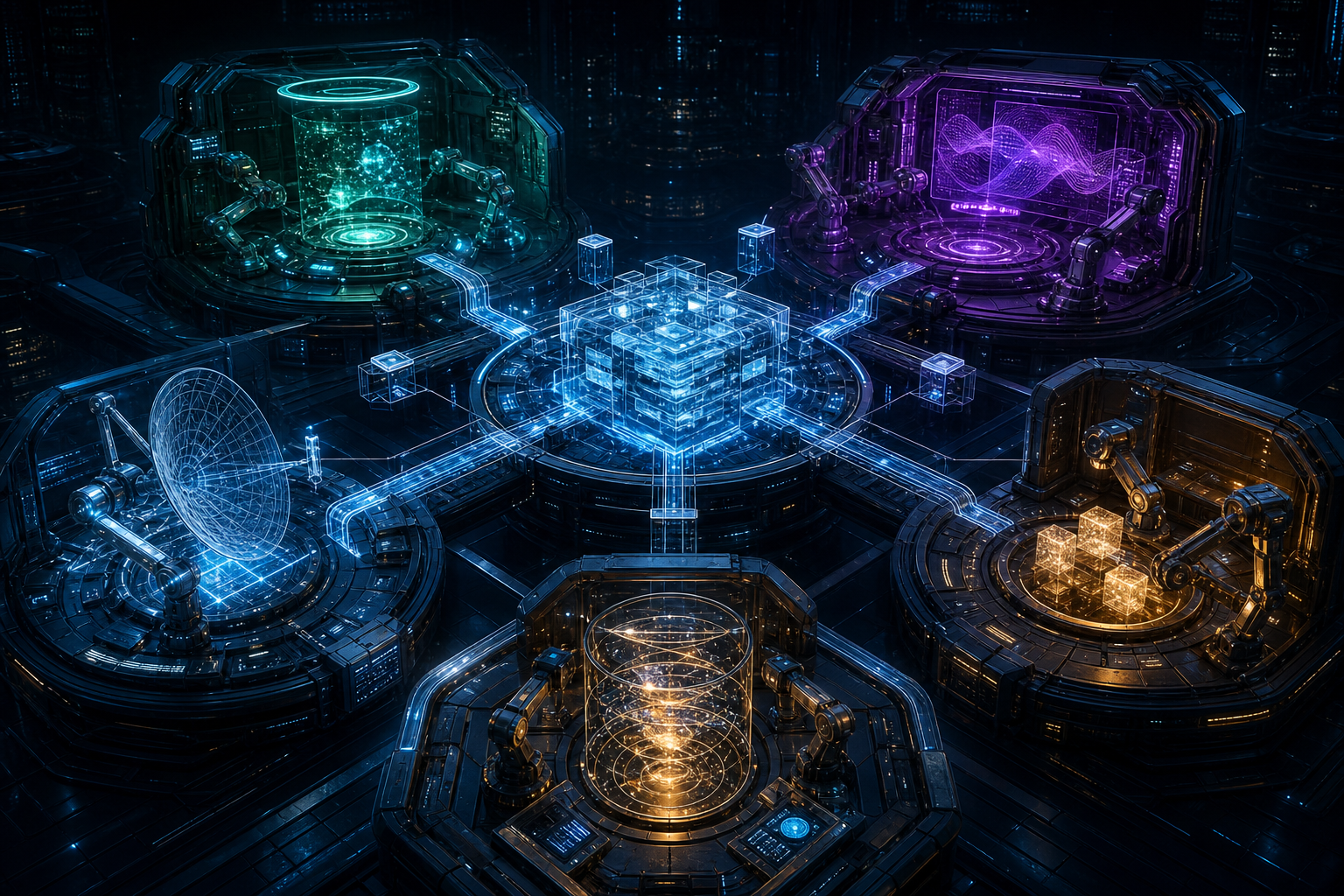
From the original series artwork — explore the series.
These names describe responsibilities, not a public tour of our internal architecture. The important idea is that the pieces cooperate without becoming one unrestricted system.
Separate responsibilities also make review clearer.
If one agent produces a result, another process or specialist can check whether the expected evidence is present or whether an important criterion was missed. That does not guarantee every mistake will be caught. It does mean the system does not have to rely entirely on the confidence of the agent that performed the original work.
When a gap is found, the goal is to surface it, preserve enough context to understand it, and route corrective work to the right place. We sometimes describe this direction as self-healing, but we use the term carefully. It is not magic, and it does not mean the system silently repairs every failure. It means the operation is designed to notice certain disagreements, keep them from disappearing, and support a governed response.
Governance is what keeps specialization from becoming chaos.
An agent can be capable of many actions while still having responsibility for only a few. Systems can exchange the context required for a task without receiving unrestricted access to one another’s information. A specialist can propose, analyze, compare, or prepare work while a different authority decides whether that work should advance.
This gives us clearer responsibility. When something succeeds, we can ask which system produced the result and what question it answered. When something fails, we can look for the missing handoff, evidence, permission, or criterion instead of treating “the AI” as one unknowable actor.
It also makes the breadth of Qensai easier to hold in your head.
There are multiple agents and applications because there are multiple kinds of work. The system is broad, but the organizing idea is straightforward: give each tool a purpose, give each agent a boundary, and give the work a way to move between them without handing control of everything to one AI.
That still leaves the most practical question.
When a person needs something done, how does the request find the right specialist without losing its context, owner, or rules along the way?
Origin Evidence: The Decision Rail Failure
Why This Record Exists: This incident captures one of the recurring failure modes that motivated the construction of QENSAI and its governed operating architecture.
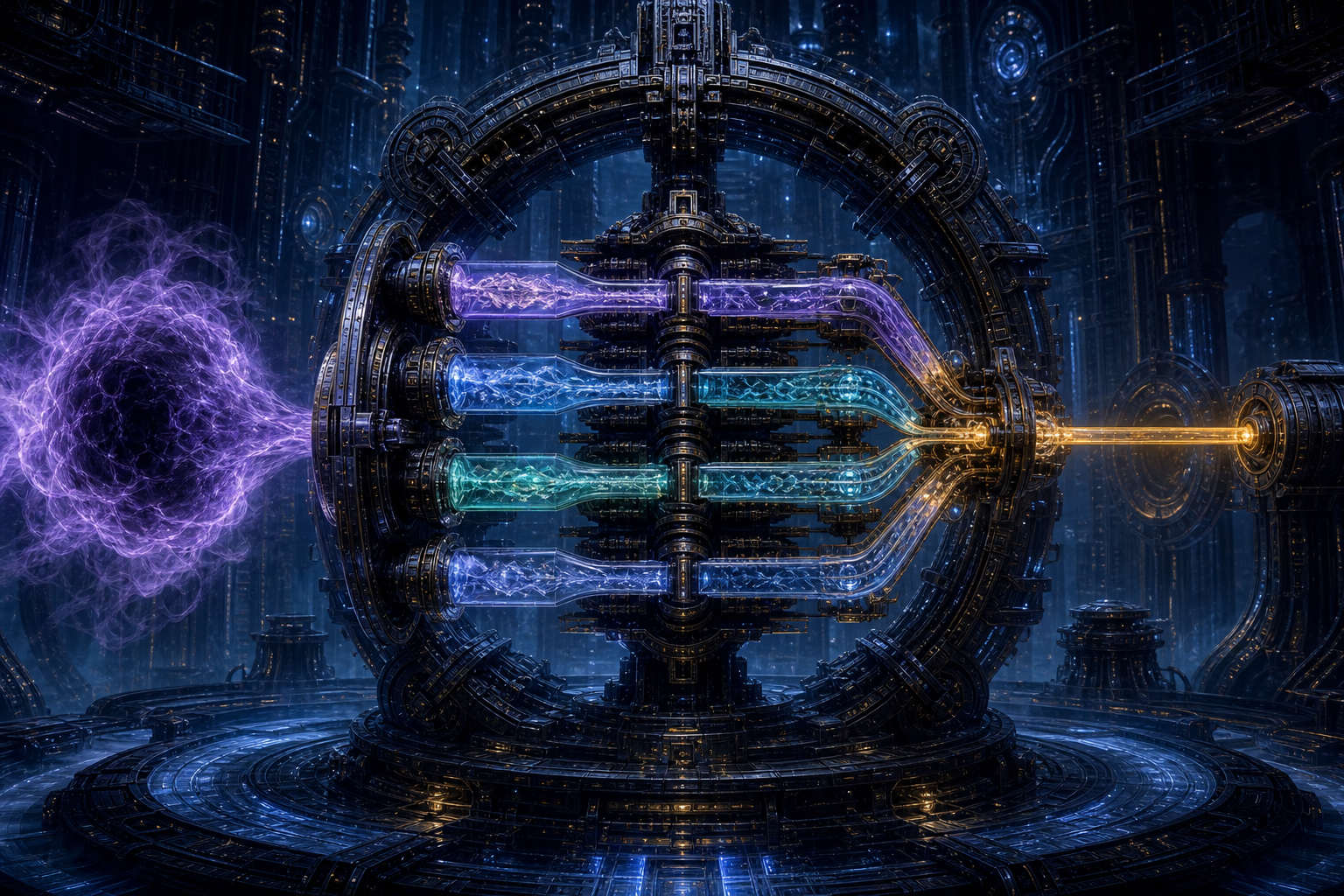
Score the Impact Before You Choose the Response
A drift signal becomes actionable only after the system separates severity, scope, evidence quality, and operational consequence.
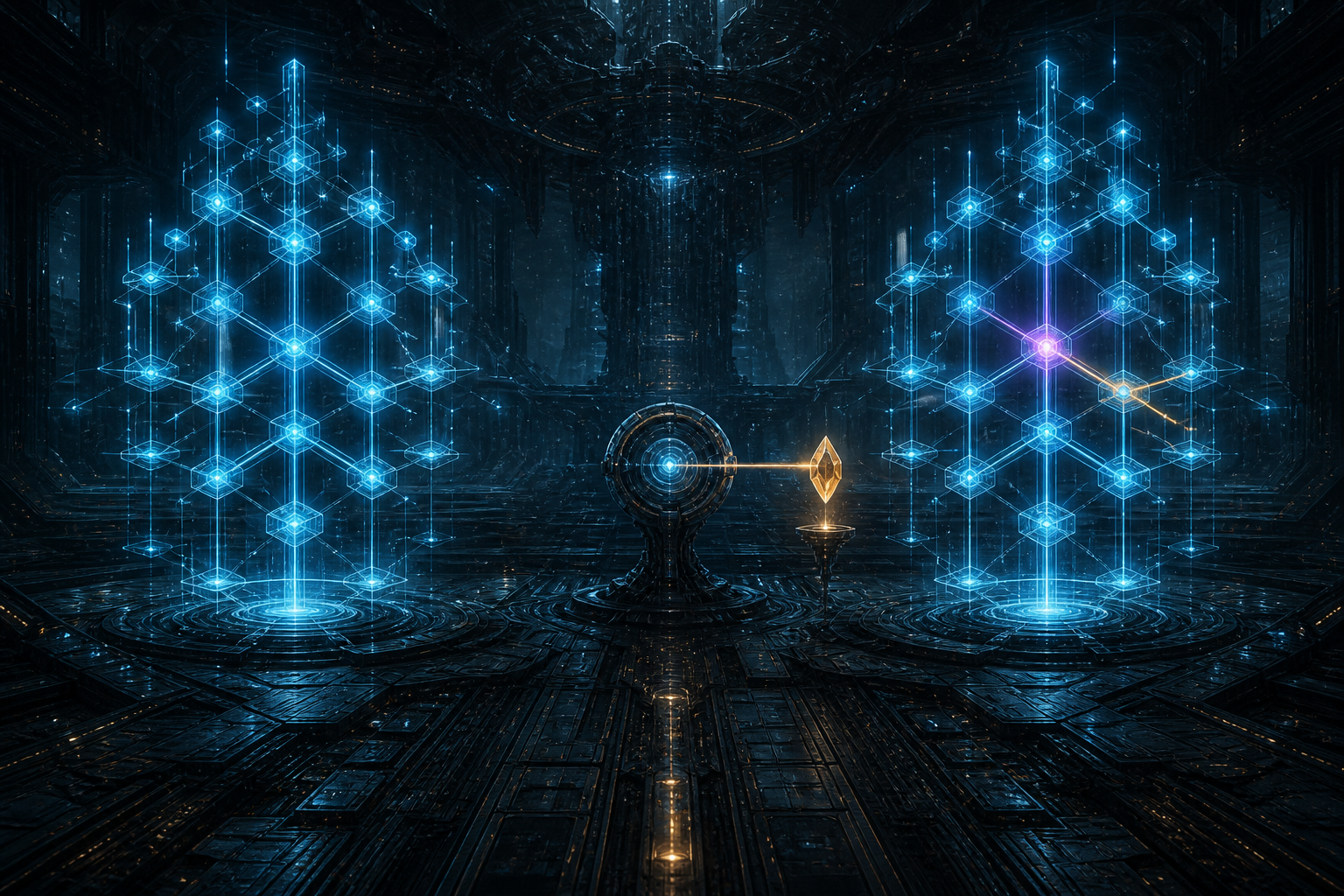
Drift Starts as a Difference, Not a Failure
Temporal cohesion begins by capturing differences in state, behavior, evidence, and system health before deciding what any difference means.
Stay Updated
Get notified when we publish new research or open licensing opportunities.
Owner-gated agent operations. Every action behind your flip.
See the platform →
0 comments